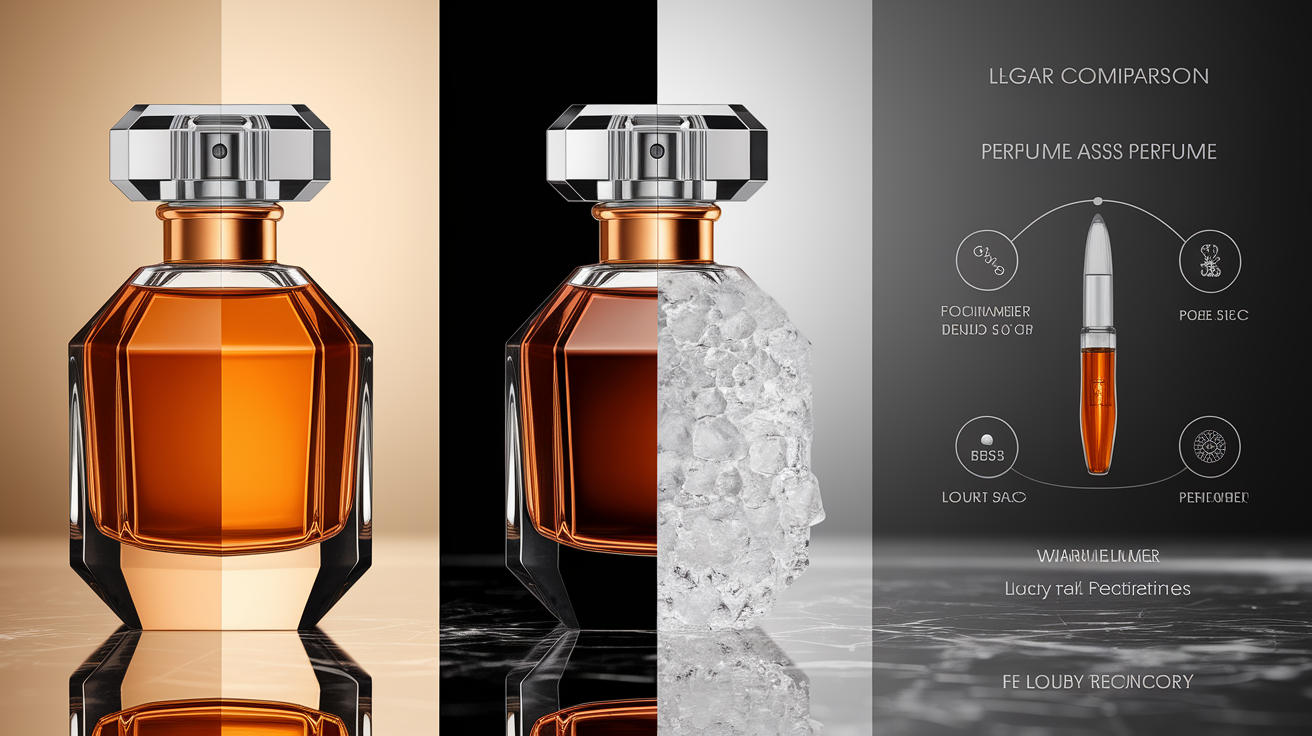
Every winter, I see the same pattern.
Temperature drops below 10°C in North India. And suddenly, fragrance WhatsApp groups explode with worried questions.
"My Paco Rabanne went cloudy." "My Armaf looks like milk." "My expensive niche perfume has white streaks - is it fake?"
I read these in YouTube comments too. Under every winter perfume video.
None of them are fake. None are ruined. They're all experiencing the same thing: cold-induced haze.
You're probably here because your perfume turned cloudy too. Maybe it was in your car during winter. Maybe you stored it in a cold room. Maybe it's always been slightly hazy and you're finally worried about it.
The good news: most cloudy perfume isn't ruined. It's experiencing reversible haze - a harmless phase change that you can fix by simply warming it up.
The less good news: some cloudiness IS permanent. And some cloudiness does mean your perfume is degraded.
In this post, I'll show you how to tell the difference, how to safely restore clarity, and when cloudiness actually means your perfume is damaged.
Let's start with the most important question.
Is Your Cloudy Perfume Actually Ruined?
Short answer: Probably not.
Long answer: It depends on why it's cloudy.
Cloudiness from cold (90% of cases):
- Reversible
- Harmless
- Fixable in 2-6 hours
Cloudiness from damage (10% of cases):
- Might be permanent
- Indicates degradation
- Not always fixable
Here's how to tell which one you have.
How to Tell If Cloudiness Is Reversible
Run this quick test:
Step 1: Check the temperature
Where has your perfume been?
- In a cold car?
- In an AC room?
- In the refrigerator (why though)?
- In a cold bathroom?
If yes → likely reversible haze from cold.
If no → might be something else.
Step 2: Move it to room temperature
Put the bottle somewhere stable:
- 20-25°C (normal room temperature)
- Away from direct sunlight
- Away from heat sources
- Away from AC vents
Step 3: Wait 6 hours
Do nothing else. Just wait.
Step 4: Check clarity
After 6 hours at room temperature:
✅ If it's clear again:
- You had reversible haze
- Your perfume is fine
- No damage occurred
❌ If it's still cloudy:
- Might be crystallization (needs longer)
- Might be permanent turbidity
- Might be actual degradation
Let's talk about what to do in each scenario.
How to Fix Reversible Haze (Cold-Induced Cloudiness)
If your perfume went cloudy from cold temperatures, here's the safe way to restore clarity:
Method 1: Room Temperature (Recommended)
What you need:
- Patience
Steps:
- Move perfume to room temperature location (20-25°C)
- Place on a stable shelf (not near windows)
- Wait 2-6 hours
- Check clarity
Why this works:
As the perfume warms, solubility increases. The precipitated ingredients redissolve into the alcohol. Clarity returns naturally.
Most cold-induced haze clears within 4-6 hours at room temperature.
Timeline by bottle size:
- 30ml bottle: 1-2 hours
- 50ml bottle: 2-4 hours
- 100ml bottle: 4-6 hours
- 200ml+ bottle: 6-8 hours
Bigger bottles have more thermal mass. They take longer to warm up.
Method 2: Gentle Warming (If Impatient)
What you need:
- Warm water (NOT hot)
- Bowl
- Patience (still)
Steps:
- Fill bowl with lukewarm water (25-30°C max)
- Place sealed perfume bottle in water
- Wait 30-60 minutes
- Remove and dry bottle
- Check clarity
Why this works:
Gentle warming accelerates the redissolving process. Still safe for fragrance molecules - this temperature won't cause degradation.
CRITICAL WARNINGS:
- Water temperature MUST be lukewarm (25-30°C)
- NOT hot water (will degrade fragrance)
- Bottle MUST be sealed (prevent water contamination)
- Don't heat in microwave (uneven heating + degradation risk)
- Don't use radiator or direct heat (too hot)
Method 3: Time + Patience (For Stubborn Cloudiness)
Some perfumes take longer to clear.
If it's still cloudy after 6 hours:
Wait 24 hours at room temperature
Sometimes crystallization takes longer to redissolve than simple haze. Natural ingredients especially can be stubborn.
After 24 hours:
- Still cloudy? → Read the crystallization section below
- Clear? → You're good, problem solved
After 48 hours:
- Still cloudy? → Might be permanent, see "When Cloudiness Won't Go Away" section
What About Shake to Fix?
You've probably heard: "Shake the bottle to mix it back together."
Don't.
Here's why shaking doesn't help and can actually cause problems:
Why Shaking Doesn't Fix Cloudiness
Cloudiness isn't about things being "unmixed." It's about things being insoluble.
Shaking a cold perfume with precipitated ingredients:
- Doesn't increase temperature
- Doesn't increase solubility
- Doesn't redissolve anything
It's like shaking a glass of cold milk. The milk doesn't get clearer. It just gets more agitated.
Why Shaking Can Cause Problems
1. Introduces air bubbles
Vigorous shaking creates tiny air bubbles throughout the perfume.
Air = oxygen. Oxygen = oxidation. Oxidation = degradation.
According to IFRA guidelines, minimizing air exposure is critical for fragrance stability.
2. Accelerates oxidation
Those air bubbles increase the surface area of perfume exposed to oxygen. More oxidation. Faster degradation.
3. Doesn't solve the underlying issue
If the perfume is cloudy because it's cold, shaking won't warm it up. You need to warm it up.
When shaking is okay:
- After the perfume has warmed up and cleared
- Very gentle swirl (not vigorous shaking)
- To remix ingredients that settled during storage
But even then, it's not necessary. Perfumes are designed to stay mixed.
For more on shaking perfume, see: Does Shaking Perfume Ruin It? Oxidation, Bubbles & Chemistry Explained
When Cloudiness Won't Go Away (Crystallization)
Sometimes cloudiness doesn't clear after 24-48 hours at room temperature.
This usually means crystallization - solid particles have formed.
How to tell if it's crystallization:
Look closely at the bottle:
- Can you see tiny particles?
- Is there sediment at the bottom?
- Are there floating crystals?
- Does it look sparkly in light?
If yes → you have crystallization.
Is crystallization bad?
Not necessarily. Many high-quality natural perfumes show crystallization. It's a sign of real ingredients, not synthetic stabilizers.
Can you fix crystallization?
Sometimes.
Method 1: Warm water bath (extended)
- Place sealed bottle in lukewarm water (25-30°C)
- Wait 1-2 hours
- Gently swirl (don't shake)
- Check if crystals dissolved
Method 2: Time at warm temperature
- Store perfume at slightly elevated temperature (25-28°C)
- Keep there for 2-3 days
- Check periodically
- Some crystals may redissolve
Method 3: Accept it
Some crystallization is permanent. The perfume still works. It still smells the same. It just has visible particles.
Many niche perfumes accept this. It's considered normal for natural formulations.
For a deep dive on crystallization, see: Perfume Crystallization Explained: Sediment, Separation & Stability
Signs Your Perfume Is Actually Damaged (Not Just Cloudy)
Reversible haze is harmless. But some cloudiness indicates real problems.
Red flags that mean actual damage:
1. Off Smell
The perfume smells:
- Rancid (like old oil)
- Sour (like vinegar)
- Musty (like mildew)
- Significantly different from original
What this means: Oxidation or microbial contamination. The fragrance molecules have degraded chemically.
Can you fix it? No. The molecules are permanently changed.
2. Color Change
The perfume has:
- Turned darker (clear → yellow → amber → brown)
- Changed hue completely
- Developed an oily layer on top
What this means: Oxidation. UV exposure. Heat damage.
Can you fix it? No. This is irreversible chemical change.
3. Permanent Separation
The perfume shows:
- Clear oil layer on top
- Clear water/alcohol layer on bottom
- Distinct boundary between layers
What this means: Emulsion broke. The oil and alcohol phases separated.
Can you fix it? Sometimes. Gentle warming + very gentle swirling might re-emulsify. But if it keeps separating, it's degraded.
4. Visible Contamination
The perfume has:
- Floating debris
- Mold or fuzzy growth (rare)
- Particles that look organic (not crystals)
What this means: Contamination. Water got in. Bacteria or mold grew.
Can you fix it? Absolutely not. Throw it away.
5. Cloudiness + Multiple Other Issues
If cloudiness comes with:
- Off smell AND
- Color change AND
- Separation
Then it's degraded. The cloudiness is a symptom of chemical breakdown, not just phase separation.
How Long Does It Take for Haze to Clear?
Normal reversible haze:
- Small bottle (30-50ml): 2-4 hours
- Standard bottle (50-100ml): 4-6 hours
- Large bottle (100ml+): 6-8 hours
Stubborn haze:
- With natural ingredients: 12-24 hours
- With crystallization: 24-48 hours
- With heavy oils: Up to 72 hours
If still cloudy after 72 hours at room temperature:
It's probably not going to clear. You have:
- Permanent crystallization (harmless but visible)
- Actual degradation (check for other signs)
- Very poorly-soluble ingredients (normal for some attars)
Can Repeated Cloudiness Damage Perfume?
Good question.
If your perfume goes cloudy from cold, clears when warm, then goes cloudy again next winter - is that harmful?
Short answer: No.
Long answer: Repeated phase changes (dissolved ⇄ precipitated) don't damage the molecules. They're physical changes, not chemical.
It's like water freezing and thawing repeatedly. The water molecules don't degrade. They just change state.
What CAN cause damage with temperature cycling:
-
Extreme temperature swings (0°C → 40°C → 0°C repeatedly)
- Can stress the bottle/seal
- Can accelerate evaporation
- Can increase oxidation (if seal weakens)
-
Rapid heating from cold (0°C → hot water)
- Thermal shock can crack glass
- Rapid expansion can weaken seal
-
Sunlight exposure during warming
- UV + temperature = accelerated degradation
- Warm in shade, not sunlight
But simple cloudiness from AC in summer, clearing when room warms? No problem. Can happen hundreds of times with no damage.
How to Prevent Cloudiness in the First Place
If you want to avoid the cosmetic issue of cloudy perfume:
Storage Best Practices
Temperature:
- Store at stable room temperature (18-25°C)
- Avoid cold rooms (basements, AC rooms)
- Avoid hot rooms (near windows, bathrooms)
- Consistency > specific temperature
Location:
- Not in car (temperature swings wildly)
- Not in bathroom (humidity + temperature changes)
- Not near windows (sunlight + temperature cycling)
- Not in fridge (why would you do this? see maceration myths)
Ideal spot:
- Bedroom closet
- Dresser drawer
- Climate-controlled room
- Somewhere dark and temperature-stable
But Here's the Truth
You don't need to obsess over preventing cloudiness.
Cloudiness from cold is:
- Harmless
- Reversible
- Normal
The bigger threats to your perfume are:
- Heat (degrades molecules)
- Light (causes oxidation)
- Air exposure (oxidation)
Cold causes cosmetic cloudiness. Heat and light cause actual damage.
Focus on avoiding heat and light. If cloudiness happens occasionally, it's fine.
What This Means For You
If your perfume is cloudy:
1. Don't panic
Most cloudiness is reversible. Your expensive perfume probably isn't ruined.
2. Rule out cold first
Was it somewhere cold? If yes → warm it to room temperature and wait 6 hours.
3. Check for other damage signs
Does it smell off? Look different? Separate into layers?
If no → it's just harmless haze.
4. Use the safe methods
Room temperature warming. Gentle warming if impatient. Never hot water. Never shaking.
5. Accept some cloudiness as normal
Natural perfumes with real ingredients sometimes show haze or crystals. That's okay. It's a sign of quality, not damage.
When to Give Up on Cloudy Perfume
Throw away your perfume if:
✗ It smells rancid or off
Chemical degradation. Can't be fixed.
✗ It has visible mold or contamination
Health risk. Not worth saving.
✗ It shows multiple degradation signs
Off smell + color change + separation = degraded beyond saving.
Keep your perfume if:
✓ Only cosmetic cloudiness
No smell change. No other issues. Just looks cloudy.
✓ Natural crystallization
Visible particles but smells fine. Normal for natural perfumes.
✓ Reversible haze that clears when warmed
Proves it's harmless phase change.
Key Takeaways
Cloudy perfume is usually:
- ✅ Reversible haze from cold
- ✅ Harmless and fixable
- ✅ Not a sign of damage
To fix cloudy perfume:
- ✅ Warm to room temperature (20-25°C)
- ✅ Wait 4-6 hours
- ✅ Check for clarity
Don't:
- ❌ Use hot water or heat
- ❌ Shake vigorously
- ❌ Panic and throw away expensive perfume
Your perfume is actually ruined if:
- ❌ Smells off (rancid, sour, wrong)
- ❌ Color permanently changed
- ❌ Shows contamination
- ❌ Multiple degradation signs together
In 90% of cases, cloudiness is just reversible phase separation. Warm it up. Give it time. It'll be fine.
Further Reading
Want to understand more about perfume stability and storage?
- Why Perfume Turns Cloudy in Cold Weather (Reversible Haze Explained) - Deep dive into the chemistry
- Perfume Crystallization Explained: Sediment, Separation & Stability - When solid particles appear
- Does Shaking Perfume Ruin It? Oxidation, Bubbles & Chemistry Explained - Why shaking doesn't fix cloudiness
- Stop Putting Your Perfume in the Fridge: Maceration Myths - Complete guide to storage myths and Indian climate tips
Looking for perfumes formulated for Indian conditions? Browse our climate-optimized collection →
References
- [Fragrance Formulation Stability - Journal of Cosmetic Science](https://onlinelibrary.wiley.com/journal/14682494) - Temperature-dependent phase changes in cosmetic formulations
- [Temperature Effects on Solubility - Chemistry LibreTexts](https://chem.libretexts.org/Bookshelves/Physical_and_Theoretical_Chemistry_Textbook_Maps/Supplemental_Modules_(Physical_and_Theoretical_Chemistry)/Equilibria/Solubilty/Temperature_Effects_on_Solubility) - How temperature affects compound solubility
- [Preferential Solubilization of Fragrances - IntechOpen](https://www.intechopen.com/chapters/89153) - Phase separation and turbidity in fragrance systems
- [IFRA Quality Standards](https://ifrafragrance.org/safe-use/standards) - International fragrance quality guidelines
- [Essential Oil Solubility in Alcohol - ScienceDirect](https://www.sciencedirect.com/science/article/abs/pii/S0260877406001178) - Temperature-dependent solubility data

About Syed Asif Sultan
Founder of House of Sultan. Passionate about fragrance chemistry and transparency in perfumery.