Client brings a bottle. "I bought this oud perfume from Dubai. ₹500 for 50ml. Is it real?"
I open it. Smell it.
Synthetic guaiacol with brown food coloring. Not even close to real oud.
"Sorry, this is 100% synthetic. No agarwood in this bottle."
Client, shocked: "But the seller said it's genuine oud oil!"
This happens daily. The oud market is flooded with fakes, synthetics, and grade misrepresentation.
Here's how to tell what's real, what's not, and why it matters.
What Oud Actually Is
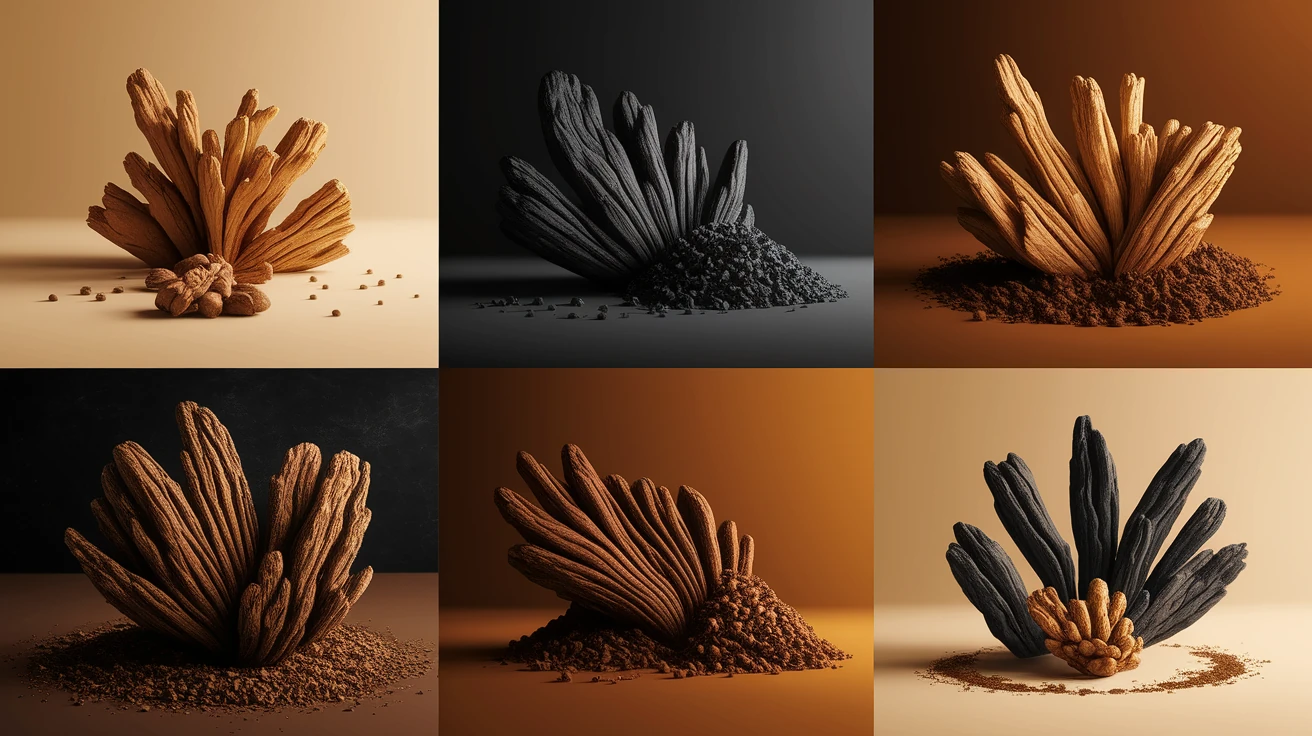
Oud (also called agarwood or aloeswood) is NOT a plant. It's a pathological response to fungal infection.
How oud forms:
- Aquilaria tree starts healthy (white wood, no smell)
- Tree gets infected by Phialophora or other fungal species
- Tree defends itself by producing dark, resinous material
- Resin-saturated wood becomes fragrant = oud/agarwood
Timeline: 10-50+ years for commercially valuable resin development.
Natural rarity: Only a small percentage of wild Aquilaria trees develop oud naturally through infection.
Source: Hashim et al. (2016) - Aquilaria spp. as source of health beneficial compounds
This natural rarity is why genuine oud commands premium prices.
Wild vs Plantation Oud: The Fundamental Difference
Wild Oud (Natural Forest Infection):
- Occurs naturally when wild Aquilaria trees become infected
- Takes decades to develop
- Extremely rare
- Status: Most Aquilaria species listed under CITES Appendix II (endangered, trade restricted)
- Problem: Harvesting often illegal, unsustainable, fuels deforestation
Plantation Oud (Controlled Cultivation):
- Aquilaria trees intentionally planted and cultivated
- Artificially inoculated with fungus to induce resin production
- Can be harvested in 10-25 years depending on method
- Status: Legal when properly certified (CITES permits required)
- Benefit: Sustainable, traceable, reduces pressure on wild populations
The reality: Most legal oud in the market today is plantation-sourced.
Why Wild Oud Is Problematic
CITES Status: Aquilaria species are listed under CITES Appendix II due to unsustainable harvesting and population decline.
Why they're endangered:
- Only small percentage of wild trees develop commercially valuable oud
- Historical overharvesting to find valuable trees
- Wild Aquilaria populations significantly declined since 1990s
- Illegal logging continues in Southeast Asian forests
Source: CITES (Convention on International Trade in Endangered Species of Wild Fauna and Flora)
What this means:
- "Wild oud" sold without proper CITES documentation is likely illegal
- Buying undocumented wild oud funds illegal harvesting
- Many "wild" claims are fraudulent (plantation sold as "wild" at markup)
Our position: We exclusively use plantation-sourced oud with proper certification. Sustainable and legal.
The Oud Grading System
Oud is graded based on resin content - more resin generally means stronger fragrance and higher quality.
General quality hierarchy (industry terms, not standardized):
Super/Premium Grade (Wild):
- High resin content, very dark, heavy
- Intense, complex aroma
- Extremely expensive (can reach tens of thousands of dollars per kilogram)
- Problem: Almost certainly illegal or unethically sourced
- Availability: Very rare in legitimate trade
Grade A (High-Quality Plantation):
- Good resin content, dark brown to black
- Rich, complex aroma
- Sinks in water (resin denser than wood)
- Significantly less expensive than wild, but still premium
- Our choice: Sustainable, legal, excellent quality
Grade B (Mid-Quality Plantation):
- Moderate resin content, medium brown
- Good aroma, less complex than Grade A
- May sink or float depending on resin distribution
- More affordable
- Used by mid-tier perfume brands
Grade C (Lower-Quality Plantation):
- Lower resin content, light brown
- Lighter aroma, less complexity
- Typically floats in water
- Most affordable natural oud
- Often blended with synthetics in budget perfumes
Synthetic "Oud":
- No agarwood at all
- Lab-created molecules (guaiacol, patchouli alcohol derivatives)
- One-dimensional woody smell
- Very cheap
- Used in most mass-market "oud" fragrances
Important note: These grades aren't officially standardized - terminology varies by region and supplier. Always verify with documentation and testing.
How to Identify Real vs Fake Oud
The Water Test (for wood chips/pieces):
- Higher-grade oud (more resin): Sinks in water
- Lower-grade oud (less resin): Floats
- Note: This tests density, not necessarily quality
The Burn Test (for wood):
- Real oud: Burns slowly, produces aromatic smoke, sweet-woody smell
- Regular wood: Burns faster, less aromatic smoke
- Caution: Don't use this test on oil
The Smell Test (most reliable):
- Real oud oil: Complex, evolves over time, woody + sweet + animalic notes
- Synthetic oud: Flat, one-dimensional, stays the same, often just "woody"
- Key: Real oud has depth and changes as it dries down
The Price Test (economic reality):
- If "genuine oud oil" costs ₹500-1,000 for 50ml perfume → Almost certainly synthetic
- Plantation oud oil costs significantly more per kilogram than cheap synthetics
- If price seems too good to be true, it probably is
The Documentation Test (for commercial purchase):
- Ask for CITES permit (required for Aquilaria products)
- Ask for plantation certification
- Request source information
- If seller can't provide documentation → Red flag
The Molecular Complexity of Real Oud
Real agarwood contains hundreds of volatile compounds, primarily sesquiterpenes.
Key oud molecules (verified from scientific literature):
- α-Agarofuran
- Jinkohol/Jinkoh-eremol
- Agarospirol
- Various chromones
- Multiple other sesquiterpenes
Source: Naef (2011) - Volatile and semi-volatile constituents of agarwood
Why molecular complexity matters:
- Hundreds of compounds create depth and evolution in scent
- Synthetics typically use 2-5 molecules total
- This is why real oud smells incomparably richer than synthetic substitutes
You cannot replicate 200+ natural compounds with 3 synthetic molecules. The difference is immediately noticeable to anyone familiar with real oud.
Why Cheap "Oud" Perfumes Aren't Really Oud
Budget "oud" perfume (₹500-1,000 for 50ml) typically contains:
- 0% actual agarwood
- Synthetic woody molecules (primarily guaiacol, sometimes patchouli alcohol)
- Brown/dark coloring to mimic oud oil appearance
- Marketing that claims "oud" without specifying "synthetic oud substitute"
Why they do this:
- Real oud oil is expensive (even low-grade plantation oud)
- Synthetics cost a tiny fraction
- Consumers often can't distinguish if they haven't smelled real oud
- "Oud" is a trendy marketing term
How to tell: If the perfume is very cheap and claims "oud," read ingredients carefully. Look for "parfum/fragrance" (which can hide synthetics) rather than "agarwood oil" or "oud oil."
Our Oud Sourcing: Plantation Grade A
What we use: High-quality plantation agarwood oil from certified sources
Why plantation:
- Sustainable: Cultivated trees, not wild harvesting
- Legal: Proper CITES certification
- Traceable: Known source, verified quality
- Ethical: Doesn't fund illegal deforestation
- Quality: Grade A plantation rivals wild oud in aroma complexity
What we DON'T use:
- Wild oud (endangered, often illegal)
- Low-grade plantation (insufficient aroma)
- Pure synthetics (flat, one-dimensional)
Our approach: We use Grade A plantation oud supplemented with small amounts of synthetic oud molecules for projection, creating best of both worlds - natural complexity with enhanced performance.
The Sustainability Imperative
The fragrance industry's demand for oud has devastated wild Aquilaria populations.
What went wrong:
- Unsustainable harvesting through 1990s-2000s
- Trees cut down indiscriminately to find infected specimens
- Populations collapsed before regulations implemented
- Black markets still exist for illegal wild oud
The solution:
- Plantation cultivation provides sustainable supply
- Proper CITES enforcement protects remaining wild populations
- Consumer awareness reduces demand for illegal wild oud
- Transparent sourcing from perfume brands
Our commitment: Only use legally sourced, sustainably harvested plantation oud with full documentation.
How to Verify Oud Quality Before Buying
Questions to ask brands:
- "Is this plantation or wild oud?"
- "Can you provide CITES certification?"
- "What grade is your oud?"
- "What percentage of the formula is actual oud vs synthetic?"
Red flags:
- Won't specify wild vs plantation
- Can't provide documentation
- Claims "wild oud" at suspiciously low prices
- Vague answers about sourcing
Green flags:
- Clearly states "plantation" or "cultivated"
- Can provide CITES permits
- Specifies grade (A, B, C)
- Transparent about blend ratios (natural + synthetic)
We answer all these questions: Plantation-sourced, Grade A, fully certified, transparent about formulation.
The Price-Quality Reality
Approximate price ranges (general market observations, vary by region/supplier):
Wild oud oil: Can reach tens of thousands of dollars per kilogram
- Why: Extreme rarity, illegal risk premium, speculation
- Problem: Mostly illegal or fraudulent
Plantation Grade A oil: Thousands of dollars per kilogram
- Why: High quality, time-intensive cultivation
- Benefit: Legal, sustainable
Plantation Grade B/C oil: Lower but still significant cost per kilogram
- Why: Less resin content, faster production
- Use: Mid-market perfumes
Synthetic oud substitutes: Very low cost per kilogram
- Why: Mass-produced chemicals
- Use: Budget perfumes
The math: A perfume claiming "oud" for ₹500/50ml cannot contain meaningful amounts of real plantation oud. The raw material cost alone wouldn't support that price.
What This Means For You
Before buying "oud" perfume:
Verify the source:
- Plantation or wild? (Wild is problematic)
- Grade? (Higher grade = better quality)
- Documented/certified? (CITES compliance)
Understand the price:
- Too cheap = synthetic
- Premium price should match premium ingredient
Smell test:
- Real oud: Complex, evolving, depth
- Synthetic: Flat, woody, unchanging
Our commitment: Grade A plantation oud, fully documented, priced fairly for direct-to-consumer model (no retail markup).
References
This article uses verified information from:
Oud Chemistry:
- Naef, R. (2011). 'The volatile and semi-volatile constituents of agarwood' - Flavour and Fragrance Journal
- Jong, P.L., et al. (2014). 'Biosynthesis of fragrant 2-(2-phenylethyl)chromones in agarwood' - Plant Physiology and Biochemistry
Sustainability & Health:
Regulation:
- CITES (Convention on International Trade in Endangered Species) - Aquilaria species listing
This isn't guesswork. This is documented science and international regulation.
See how we use oud in formulation →
Understand our sourcing transparency →
Shop certified plantation oud perfumes →
References
- Naef, R. (2011). 'The volatile and semi-volatile constituents of agarwood.' Flavour and Fragrance Journal, 26(2), 73-89.
- Hashim, Y.Z.H., et al. (2016). 'Aquilaria spp. (agarwood) as source of health beneficial compounds.' Advances in Pharmacological Sciences, 2016.
- Jong, P.L., et al. (2014). 'Biosynthesis of fragrant 2-(2-phenylethyl)chromones in agarwood.' Plant Physiology and Biochemistry, 84, 97-105.

About Syed Asif Sultan
Founder of House of Sultan. Passionate about bringing premium, climate-optimized fragrances to India at honest prices.