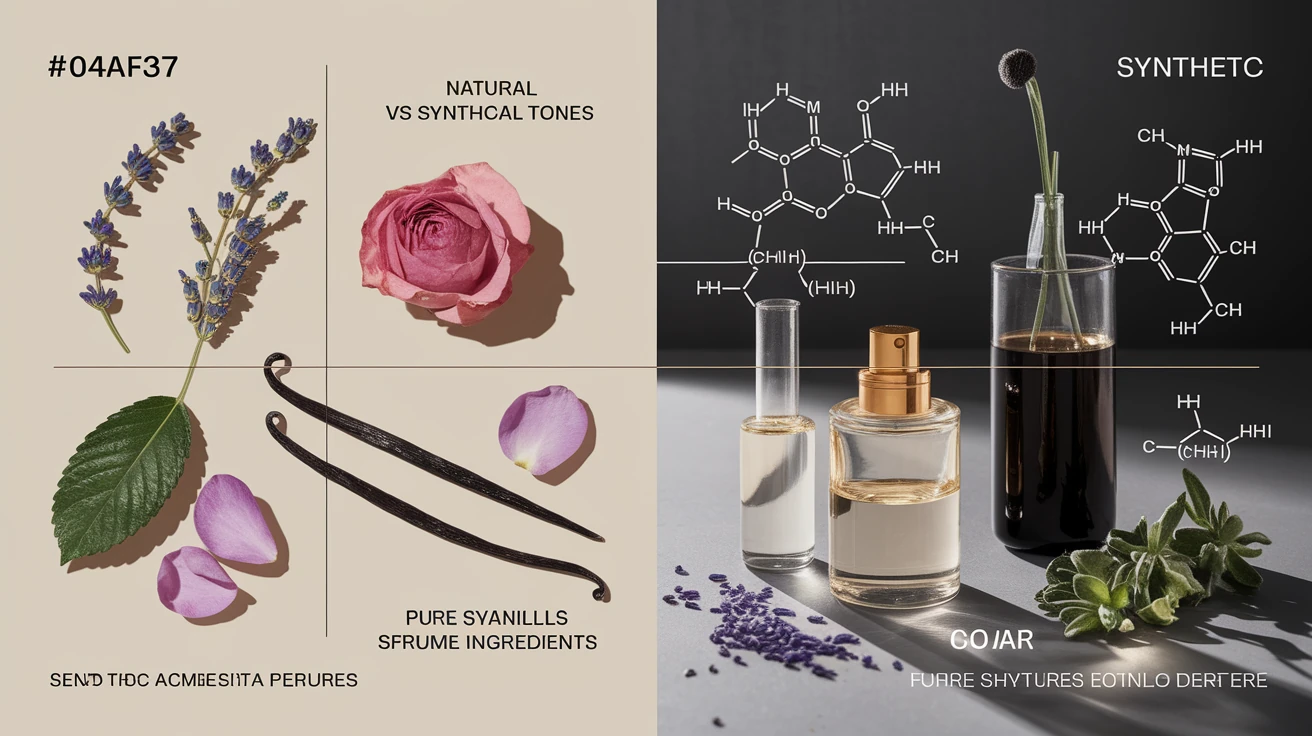
Client walks in: "I only wear natural perfumes. Synthetics are toxic chemicals."
I pull out two vials. Both clear liquid. Both smell like lavender.
"Which one is natural?"
She points to the left. "That one smells more... authentic."
Wrong. Left vial is synthetic linalool (lab-made). Right vial is lavender essential oil (plant extract).
They're chemically identical. Same molecule. Same smell. Same "naturalness" at molecular level.
But one costs significantly less than the other.
Guess which perfume brands prefer?
The Big Lie About "Natural" Perfumes
Here's what the natural perfume industry won't tell you:
Claim: "Natural ingredients are safer and better for you." Reality: Nature makes some of the most toxic substances on Earth.
Examples:
-
Oak moss absolute (natural): Contains atranol and chloroatranol - known allergens, heavily restricted by IFRA
-
Synthetic linalool (lab): Pure compound, no allergens, completely safe
-
Jasmine absolute (natural): Contains benzyl acetate + indole - skin irritants for some people
-
Hedione (synthetic jasmine): Clean molecule, minimal irritation, hypoallergenic
The irony? Synthetic fragrances are often SAFER than natural ones because we can control exactly what goes into them.
When Synthetics Are Identical to Natural
Linalool is linalool. Whether extracted from lavender or synthesized in a lab.
Same molecular structure: C₁₀H₁₈O Same properties: Floral, slightly spicy Same smell: Lavender
Your nose can't tell the difference. Neither can a mass spectrometer.
The only difference? Source and price.
Natural linalool (from lavender oil):
- Significantly more expensive
- Contains 100+ other compounds (some allergenic)
- Batch variation (depends on harvest, weather, soil)
- Environmental cost (land use, water, pesticides)
Synthetic linalool:
- Much less expensive
- 99.9% pure compound
- Consistent batch-to-batch
- Made from turpentine (sustainable forestry byproduct)
If you want lavender smell, synthetic gives you EXACTLY lavender (pure linalool). Natural gives you lavender PLUS 100 other molecules you didn't ask for.
Which is better? Depends on what you value.
The Three Categories of Fragrance Ingredients
Category 1: Identical Natural-Synthetic
- Molecule exists in nature
- We synthesize the exact same molecule in lab
- Chemically indistinguishable
Examples:
- Vanillin (vanilla smell)
- Linalool (lavender smell)
- Eugenol (clove smell)
- Limonene (citrus smell)
These are "nature-identical synthetics." Same molecule, different source.
Category 2: Synthetic-Only (Doesn't Exist in Nature)
- Created in lab
- No natural counterpart
- Often better performing than natural options
Examples:
- ISO E Super (woody, amber)
- Ambroxan (ambergris substitute)
- Hedione (jasmine amplifier)
- Galaxolide (white musk)
These molecules don't exist in nature. But they smell incredible.
Category 3: Natural-Only (Can't Be Synthesized)
- Extracted from plants/animals
- Too complex to recreate in lab
- Contain hundreds of compounds working together
Examples:
- Real oud (agarwood resin)
- Rose absolute (600+ compounds)
- Natural ambergris (whale secretion)
- Genuine sandalwood oil (90+ compounds)
These CAN'T be fully synthesized. The complexity is too high.
When someone says "I only wear natural perfumes," they're ruling out Category 1 (pointless - it's the same molecule) and Category 2 (missing out on amazing scents).
They're stuck with Category 3 only - which is expensive and increasingly unsustainable.
The Environmental Cost of "Natural"
Let's talk sandalwood.
To get sandalwood oil from natural Indian sandalwood:
- Requires significant heartwood from mature trees
- Trees take 15-30 years to reach harvest maturity
- Water and energy intensive distillation process
- Massive land use and resource consumption
Result: Expensive oil, trees destroyed, large environmental footprint.
Synthetic santalol (sandalwood smell):
- Made from sustainable precursors (camphor or other sources)
- No trees cut
- Significantly less expensive
- Much lower environmental impact
Which is more "natural" - killing mature trees or making molecules in a lab?
Or oud. Real wild agarwood:
- Endangered species (CITES Appendix II)
- Takes 50+ years to form resin naturally
- Illegal harvesting destroying forests
- Extremely expensive
Synthetic oud accord:
- Blend of guaiacol, patchouli alcohol, and other molecules
- No endangered species harmed
- Significantly less expensive
- Doesn't destroy ecosystems
Smells reasonably similar. Costs far less. Doesn't fund illegal deforestation.
We use sustainable plantation oud + synthetic oud molecules for balanced performance and ethical sourcing.
When We MUST Use Natural
Some smells can't be synthesized. The complexity is too high.
Rose absolute: 600+ compounds
- We can synthesize phenylethyl alcohol (main rose molecule)
- We can't recreate the full profile
Natural rose smells layered: floral + honey + green + metallic Synthetic rose smells flat: just floral
For complex formulations, real rose absolute (from sustainable sources like Kannauj, India) provides depth that synthetics can't match.
Natural oud: 200+ sesquiterpene compounds
- We can synthesize guaiacol + patchouli alcohol (main oud notes)
- We can't recreate the animalic richness
Natural oud smells complex: woody + leathery + sweet + medicinal Synthetic oud smells one-dimensional: just woody
We use Grade A plantation oud (sustainable). Then can amplify with synthetic oud molecules for projection.
Vanilla absolute: Vanillin + 200 other compounds
- We can synthesize vanillin (main vanilla molecule)
- We can't capture the creamy, tobacco-like undertones
Natural vanilla smells rich: sweet + creamy + tobacco + caramel Synthetic vanillin smells simple: just sweet
Blending both approaches (synthetic vanillin for cost control + natural vanilla absolute for complexity) creates best results.
The Allergen Problem with Natural Ingredients
IFRA (International Fragrance Association) restricts many NATURAL ingredients due to allergen risk:
Oak moss absolute (natural):
- Contains atranol + chloroatranol
- Strong allergens
- Heavily restricted in perfumes (maximum concentration limits)
Synthetic oakmoss (Evernyl):
- No allergens
- Can be used at higher concentrations
- Safer
Jasmine absolute (natural):
- Contains benzyl benzoate + benzyl salicylate
- Moderate allergens
- Some people react
Hedione (synthetic jasmine):
- Single pure molecule
- No allergenic compounds
- Hypoallergenic
The "natural = safe" myth is dangerous. Nature makes plenty of allergens.
Lab synthesis lets us remove the bad stuff and keep only the good molecules.
Our Hybrid Strategy at House of Sultan
We use BOTH natural and synthetic. Strategically.
Use natural when:
- Complexity can't be replicated (oud, rose, sandalwood)
- Depth matters more than cost
- Sustainable sourcing available
Use synthetic when:
- Molecule is identical to natural (linalool, limonene, vanillin)
- Safety profile is better (no allergens)
- Environmental cost of natural is too high
General formulation approach:
- Oud: Primarily plantation-sourced natural oud, supplemented with synthetic oud molecules for projection
- Rose: Natural rose absolute from sustainable sources (Kannauj)
- Sandalwood: Blend of sustainable Australian sandalwood + synthetic santalol
- Vanilla: Combination of natural vanilla absolute and synthetic vanillin
- Bergamot: Synthetic (allergenic bergapten removed for safety)
- Musk: Synthetic (animal musk banned and unethical)
Result: Complex, long-lasting, safe, sustainable, accessible.
If we went "100% natural": Extremely expensive, potentially allergenic, environmentally questionable, some ingredients illegal. If we went "100% synthetic": Very cheap, flat smell, no depth, "cheap perfume" feel.
Hybrid = best of both worlds.
The Synthetic Molecules That Changed Perfumery
Some synthetic molecules are BETTER than anything nature provides:
1. Iso E Super (woody, amber)
- Doesn't exist in nature
- Smells incredible (warm, velvety, woody)
- Extremely long-lasting
- Used in 80% of modern perfumes
- Note: Overused in some mass-market fragrances
2. Ambroxan (ambergris substitute)
- Natural ambergris comes from whale intestines (unethical + extremely expensive + rare)
- Ambroxan is synthetic, similar smell profile
- Warm, marine, ambery
- Lasts 12+ hours on skin
3. Hedione (jasmine amplifier)
- Makes jasmine smell "bloom"
- Triggers specific brain receptors (research shows potential stress-reducing effects)
- Can't get this effect from natural jasmine alone
4. Galaxolide (white musk)
- Natural musk from deer (banned, unethical)
- Galaxolide is synthetic, clean musk smell
- Soft, powdery, long-lasting
- Used in most "musk" perfumes today
Without these synthetics, modern perfumery wouldn't exist.
"All natural" perfumes are limited to ingredients available pre-synthetic chemistry - essentially 1920s-era formulations.
How to Read Ingredient Lists
Perfume ingredient lists are intentionally vague. Here's how to decode:
"Parfum" or "Fragrance":
- Legally, brands don't have to disclose what's inside
- Could be 10 ingredients or 100
- Could be all natural, all synthetic, or hybrid
- You'll never know from the label alone
"Essential oils":
- Natural plant extracts
- Sounds good, but could contain allergens
- Not automatically "better" than alternatives
"Nature-identical":
- Synthetic molecules matching natural ones
- Same smell, often lower cost, frequently safer
- Chemically indistinguishable from natural counterpart
"Isolates":
- Single molecules extracted from natural sources
- Example: Linalool isolated from lavender oil
- Technically natural, but processed in lab
At House of Sultan, we don't hide behind "Parfum." We're transparent about using strategic blends of natural and synthetic ingredients chosen for performance, safety, and sustainability.
Transparency matters.
The Price Difference
Why synthetic-heavy perfumes cost less:
Mass-market perfume (90%+ synthetic):
- Very low ingredient cost
- High retail markup
- Affordable but often simple smell profile
Luxury natural-heavy perfume (80%+ natural):
- Very high ingredient cost
- Extremely high retail markup
- Expensive, complex smell, but often unsustainable sourcing
Hybrid approach (60-40 natural-synthetic blend):
- Moderate ingredient cost
- Reasonable markup
- Complex smell, sustainable, accessible pricing
Synthetics are cheaper. That's why mass-market brands love them.
But "cheap synthetics" smell cheap. High-quality synthetics (Iso E Super, Ambroxan, Hedione) are more expensive and smell incredible.
We use premium synthetics + sustainable naturals. Not bottom-tier chemical formulations.
Testing Natural vs Synthetic Yourself
Try this:
- Buy pure synthetic linalool (available online from fragrance suppliers)
- Buy lavender essential oil
- Smell them side-by-side
You'll notice:
- Synthetic linalool: Clean, pure lavender smell
- Natural lavender oil: Lavender + herbaceous + slightly camphoraceous
The natural has more complexity (other compounds). But is it "better"? Subjective.
Some people prefer clean synthetic. Some prefer complex natural.
Neither is wrong.
What This Means For You
Next time someone says "only natural perfumes are good":
- Ask them if they know the molecular difference between natural linalool and synthetic linalool (there is none)
- Ask them if they're okay with endangered sandalwood trees being cut for their perfume
- Ask them if they avoid all synthetic molecules (if yes, they can't wear most modern perfumes)
"Natural" is marketing. Molecules are molecules.
What matters:
- Does it smell good?
- Does it last?
- Is it safe?
- Is it sustainable?
Our answer: Use the best of both. Natural complexity where it matters. Synthetic purity where it's identical or better. No dogma. Just chemistry.
That's how you make perfumes that smell incredible, last long, don't trigger allergies, and don't destroy ecosystems.
Natural vs synthetic isn't the question. Smart formulation is the answer.
References
This article uses principles from:
Fragrance Chemistry:
- Sell, C.S. (2006). The Chemistry of Fragrances: From Perfumer to Consumer (2nd ed.). Royal Society of Chemistry
- Bauer, K., Garbe, D., & Surburg, H. (2001). Common Fragrance and Flavor Materials (4th ed.). Wiley-VCH
- Ohloff, G., Pickenhagen, W., & Kraft, P. (2011). Scent and Chemistry: The Molecular World of Odors. Wiley-VCH
Safety & Allergens:
- Herman, A. (2019). Antimicrobial ingredients as preservative booster and components of self-preserving cosmetic products. Current Microbiology, 76(6)
Industry Regulations:
- IFRA (International Fragrance Association) Standards
Learn about perfume formulation →
Understand ingredient sourcing →
Shop hybrid-formulated perfumes →
References
- Sell, C.S. (2006). The Chemistry of Fragrances: From Perfumer to Consumer (2nd ed.). Royal Society of Chemistry, Cambridge.
- Bauer, K., Garbe, D., & Surburg, H. (2001). Common Fragrance and Flavor Materials (4th ed.). Wiley-VCH.
- Ohloff, G., Pickenhagen, W., & Kraft, P. (2011). Scent and Chemistry: The Molecular World of Odors. Wiley-VCH.
- Herman, A. (2019). Antimicrobial ingredients as preservative booster and components of self-preserving cosmetic products. Current Microbiology, 76(6), 744-754.

About Syed Asif Sultan
Founder of House of Sultan. Passionate about bringing premium, climate-optimized fragrances to India at honest prices.