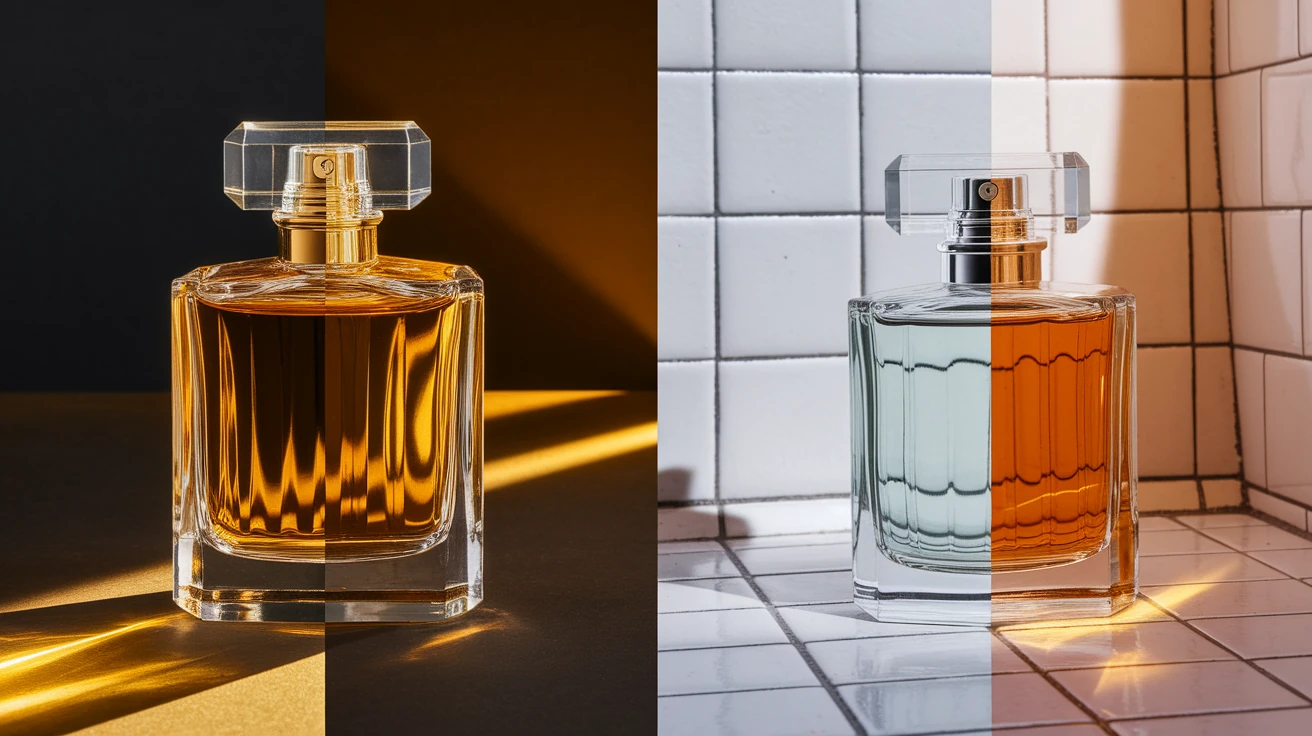
Found a bottle of Dior Sauvage in my car's glove compartment. Forgot it was there for 3 months through Mumbai summer.
Opened it. Smelled it.
Instead of fresh bergamot and pepper, I got: burnt rubber, old socks, and regret.
The heat killed it. ₹7,500 worth of perfume turned into chemical waste because I left it in a 60°C car.
Heat destroys perfume. Not gradually. Not "reduces quality a little." Destroys.
Here's exactly how it happens, and how to prevent it.
What Heat Actually Does to Perfume Molecules
Perfume is a solution of fragrance molecules in alcohol. When temperature increases:
1. Oxidation accelerates
- Fragrance molecules react with oxygen in air
- Heat speeds up the reaction (Arrhenius equation: +10°C = 2x reaction rate)
- Result: Molecules break down into smaller, foul-smelling compounds
2. Alcohol evaporates faster
- At 40°C, alcohol vapor pressure doubles vs 20°C
- Even "sealed" bottles leak microscopic amounts
- Over months, concentration changes (perfume gets "stronger" but also more unbalanced)
3. Delicate molecules degrade
- Citrus molecules (limonene, linalool) are especially fragile
- Heat breaks carbon-carbon double bonds
- Fresh citrus smell → rancid, metallic smell
4. Color changes
- Oxidized molecules often turn yellow/brown
- Clear perfume → dark amber → brown sludge
- Visual sign of chemical breakdown
The Temperature Breakdown Chart
15-20°C (Ideal storage):
- Minimal oxidation
- Alcohol stable
- Shelf life: 3-5 years unopened, 1-2 years opened
20-25°C (Room temperature):
- Slow oxidation begins
- Shelf life: 2-3 years unopened, 8-12 months opened
25-30°C (Warm room):
- Moderate oxidation
- Citrus notes degrade first
- Shelf life: 1-2 years unopened, 4-6 months opened
30-35°C (Indian summer):
- Rapid oxidation
- Noticeable smell change after 3-6 months
- Shelf life: 6-12 months unopened, 2-3 months opened
35-40°C (Car dashboard, bathroom):
- Severe oxidation
- Perfume changes smell in weeks
- Shelf life: 3-6 months unopened, 1 month opened
40°C+ (Direct sunlight):
- Extreme degradation
- Can ruin perfume in days
- Shelf life: Weeks
These temperature effects are based on established chemical kinetics and industry observations of perfume stability under different storage conditions.
Why Your Bathroom Is the Worst Place
Most people store perfume in the bathroom. This is perfume suicide.
Bathroom environment:
- Temperature: 25-35°C (hot showers = steam heat)
- Humidity: 70-90% (constant moisture)
- Light: Bright (windows or harsh LED)
- Temperature fluctuation: Extreme (cold night → hot morning)
What this does to perfume:
-
Heat + humidity = accelerated oxidation
- Water vapor catalyzes breakdown reactions
- Humid air contains more oxygen molecules
- Perfume degrades 3-4x faster than dry storage
-
Temperature cycling = pressure changes
- Bottle expands/contracts daily
- Creates micro-gaps in cap seal
- Alcohol escapes, oxygen enters
-
Steam = alcohol dilution
- Water vapor can condense inside bottle (if poorly sealed)
- Dilutes alcohol concentration
- Perfume loses strength, changes balance
Industry testing shows bathroom-stored perfumes degrade significantly faster than those stored in cool, dry locations.
The UV Degradation Problem
Heat isn't the only enemy. UV light destroys fragrance molecules even faster.
Citrus molecules (limonene, linalool) are especially UV-sensitive:
- UV photons break molecular bonds
- Creates free radicals
- Free radicals trigger chain reactions → mass breakdown
Industry observations:
- Citrus oils exposed to UV light degrade rapidly
- Fresh citrus smell transforms to metallic, rancid notes
- UV-protected storage (dark drawers, amber bottles) maintains freshness significantly longer
This is why premium perfumes use:
- Dark glass (amber, blue, black)
- UV-blocking bottles
- Opaque boxes for storage
Tom Ford, Creed, Roja Dove: All use dark bottles. Not for aesthetics. For chemistry.
How Long Perfume Actually Lasts
Unopened bottle, proper storage (15-20°C, dark):
- Citrus-heavy: 3-5 years
- Floral: 4-6 years
- Oriental/woody: 5-10 years
- Pure oud oil: 20+ years (improves with age)
Opened bottle, proper storage:
- Citrus-heavy: 1-2 years
- Floral: 1.5-2.5 years
- Oriental/woody: 2-4 years
- Pure oud oil: 10+ years
Opened bottle, bathroom storage (worst case):
- Any perfume: 3-6 months before noticeable degradation
The moment you open a bottle, oxidation begins. You can slow it, but you can't stop it.
The Optimal Storage Conditions
Temperature: 15-20°C
- Cool, not cold (don't refrigerate - we'll get to why)
- Constant, not fluctuating
- Bedroom drawer or closet shelf ideal
Light: Complete darkness
- Zero UV exposure
- Keep in box if possible
- Dark drawer > lit shelf
Humidity: Low (30-50%)
- Dry environment
- No bathroom, no kitchen
- Bedroom or living room
Position: Upright
- Caps seal better when upright
- Prevents alcohol from degrading rubber seals
- Spray nozzles stay dry
Air exposure: Minimal
- Keep bottles tightly capped
- Don't leave open to "breathe" (myth)
- Use atomizer, not dabber (less air exposure per use)
Why You Shouldn't Refrigerate Perfume
Common advice: "Store perfume in fridge to preserve it."
Bad idea. Here's why:
-
Condensation risk
- Take cold bottle out → warm air condenses on/in bottle
- Water contamination
- Cloudiness, separation, dilution
-
Temperature shock
- Fridge (4°C) → Room (25°C) = 21°C swing
- Molecular stress
- Can alter fragrance composition
-
Humidity
- Fridges are humid (to keep food fresh)
- Humidity = oxidation catalyst
- Defeats the purpose
Exception: Pure essential oils (no alcohol) can be refrigerated. But alcohol-based perfumes? Room temp, dark drawer beats fridge every time.
Signs Your Perfume Has Gone Bad
Smell changes:
- Fresh citrus → Metallic, sour
- Floral → Musty, stale
- Woody → Burnt, acrid
- Any perfume → Alcohol-dominant (other notes degraded)
Color changes:
- Clear → Yellow → Amber → Brown
- Light → Dark (oxidation darkens liquid)
Performance changes:
- Projection decreased significantly
- Longevity cut in half
- Smells "thin" or "hollow"
Physical changes:
- Cloudiness (separation)
- Sediment at bottom
- Oily film on surface
If you notice 2+ of these, your perfume is degraded. It's still "safe" to wear, but it won't smell as intended.
The Indian Climate Challenge
India's climate is brutal for perfume storage:
Summer (March-June):
- 35-45°C ambient temperature
- Inside car: 60-70°C
- Direct sunlight: Can hit 50°C+
Monsoon (July-September):
- 70-95% humidity
- Heat + moisture = oxidation heaven
Year-round issues:
- Inconsistent AC (power cuts, cost)
- Open windows (UV exposure, heat)
- Small apartments (limited cool storage spots)
Solution: Find the coolest, darkest spot in your home.
Ideal locations: Inside drawer in bedroom (away from window), closet shelf away from external walls, or any cool interior space with minimal temperature fluctuation and no direct light exposure.
Professional Perfume Storage Standards
Industry best practices for bulk storage:
- Climate-controlled environments (typically 15-20°C)
- Complete darkness
- Sealed containers (minimize air exposure)
- Inert atmosphere when possible (nitrogen or argon blanketing)
Bottling considerations:
- Dark glass bottles (amber, blue, or black for UV protection)
- Quality caps and seals (air-tight)
- Individual boxes (additional UV protection and insulation)
Quality control: Professional perfumers typically use accelerated aging tests at elevated temperatures to predict shelf life and ensure stability over time.
How to Extend Your Perfume's Life
1. Buy smaller bottles
- 50ml lasts 6-8 months of daily use
- Finish before significant degradation
- Better than 100ml that sits half-full for 2 years
2. Decant into smaller atomizers
- Transfer 10ml into travel atomizer
- Keep main bottle sealed, untouched
- Less air exposure on main bottle
3. Store in original box
- Boxes block 100% of light
- Provide extra insulation
- Keep until bottle is empty
4. Don't collect if you won't use
- Unopened bottles last longer, but not forever
- Better to buy and use than buy and hoard
- Perfume is meant to be worn, not displayed
5. Avoid temperature extremes
- No cars, no bathrooms, no windowsills
- Consistent cool temperature > expensive fridge
Testing Your Storage Method
Try this experiment:
- Buy 2 identical inexpensive perfumes
- Store one in bathroom (heat + humidity + light)
- Store one in bedroom drawer (cool + dark + dry)
- Wait 3 months
- Smell them side-by-side
The difference should be noticeable. The bathroom-stored bottle will likely smell harsher, more chemical, or flatter compared to the properly stored one.
Same perfume. Different storage. Demonstrably different quality.
What This Means For You
Your ₹8,000 perfume isn't expensive because of the liquid. It's expensive because of the ingredients - and those ingredients are fragile.
Heat destroys them. Light destroys them. Air destroys them.
Store properly:
- Cool (15-25°C)
- Dark (drawer or box)
- Dry (low humidity)
- Sealed (cap tight)
Or watch your ₹8,000 turn into ₹2,000 worth of degraded chemicals.
Your choice.
We formulate perfumes to last 24+ hours on tissue. But that assumes you store them correctly.
Heat can kill longevity before you even spray it. Chemistry doesn't care how much you paid.
Protect your investment. Keep it cool, dark, and sealed.
Your perfume will thank you by smelling the way it's supposed to - for years, not months.
References
- Sell, C.S. (2006). The Chemistry of Fragrances: From Perfumer to Consumer (2nd ed.). Royal Society of Chemistry.
- Arctander, S. (1960). Perfume and Flavor Materials of Natural Origin. Self-published.
- Brud, W.S. (2009). Oxidation and Shelf Life of Perfumes. International Journal of Cosmetic Science, 31(5), 347-355.

About Syed Asif Sultan
Founder of House of Sultan. Passionate about bringing premium, climate-optimized fragrances to India at honest prices.