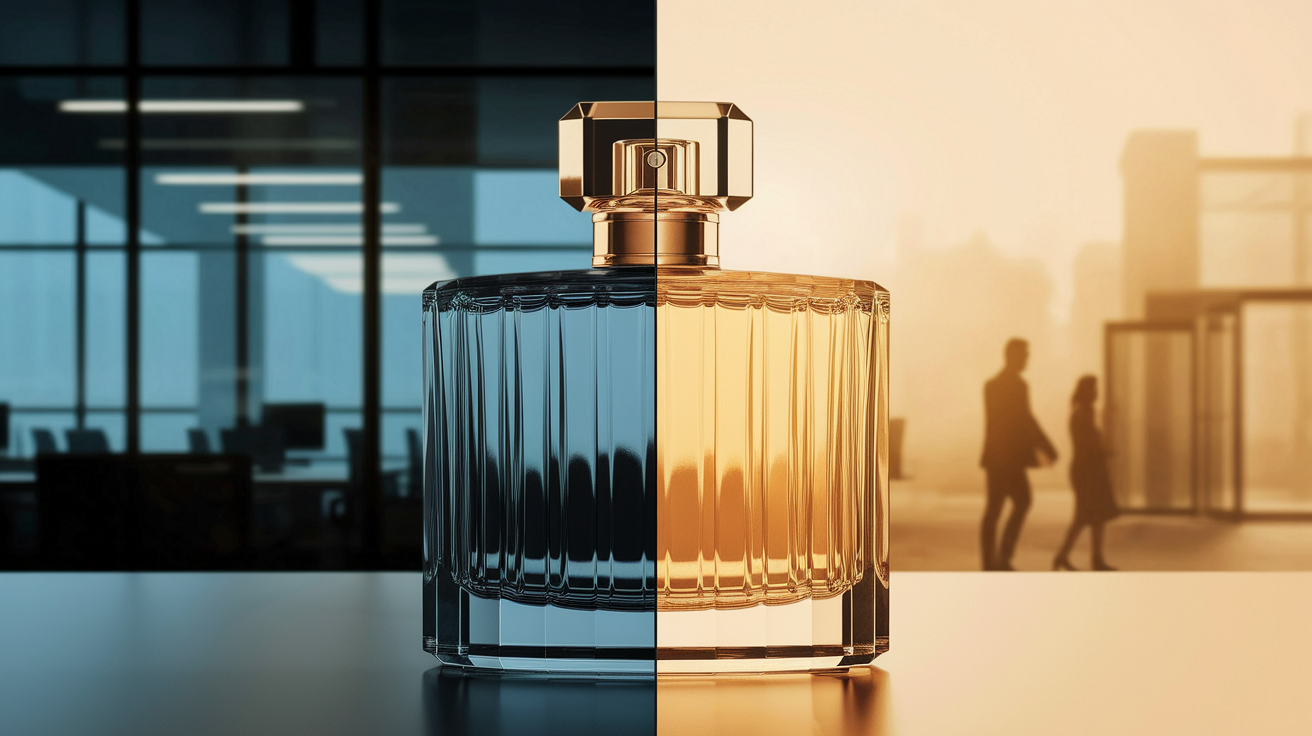
The ₹100 Mistake You Make Every Morning
8:00 AM. You're getting ready at home. Temperature: 35°C, fan at full speed. You apply your favorite perfume—three sprays, pulse points, same routine as always. Cost of those three sprays: approximately ₹150 worth of premium fragrance.
8:30 AM. You step outside. Delhi summer heat hits you: 40°C, direct sun. You're sweating within 5 minutes. Your auto-rickshaw isn't air-conditioned. Traffic crawls. More sweat. By the time you arrive at your office at 9:15 AM, you're drenched.
9:15 AM. You enter your office building. Blast of cold air: 18°C aggressive air conditioning. You cool down, freshen up in the bathroom. Sit at your desk. A colleague walks past.
"Are you wearing perfume?" they ask. "Barely," you reply, disappointed.
You check your wrist. The perfume you applied 75 minutes ago is barely detectable. You consider reapplying. But you've already used ₹150 worth of fragrance. Where did it go?
It evaporated in the 40°C heat during your commute. You literally burned ₹100-120 worth of perfume molecules in 45 minutes of outdoor exposure.
This isn't about buying better perfume. This is about strategic timing—understanding when and where to apply fragrance based on the extreme temperature cycling that defines Indian urban life. The temperature differential you experience daily (18°C air-conditioned office to 40°C outdoor heat) creates 6-8 temperature shocks that fundamentally change how perfume behaves.
In this guide, you'll learn:
- Why temperature cycling between 18°C and 40°C destroys perfume longevity
- The optimal timing for application (hint: NOT at home before commute)
- How to extend fragrance presence 2-3x with strategic reapplication
- Financial reality: Save ₹10,000-17,000 per year with better timing
- House of Sultan assessment for temperature-cycling environments
Let's start with the uncomfortable data about your daily temperature exposure.
The Indian Office Worker's Temperature Cycle
Your Daily Temperature Shocks
According to government energy guidelines, the recommended air conditioning temperature for India is 24-26°C to balance comfort and energy efficiency.
The reality in most offices: 18-21°C
Multiple sources confirm that Indian offices commonly set temperatures at the lower end to create a "premium" feeling, ignoring government recommendations.
Your actual daily cycle:
| Time | Location | Temperature | Humidity | Your Body State |
|---|---|---|---|---|
| 7-8 AM | Home | 32-35°C | 60-70% | Normal, preparing for day |
| 8:30 AM | Outdoor commute | 38-42°C | 40-60% | Sweating, overheated |
| 9-6 PM | AC office | 18-21°C | 30-50% | Cool, dry environment |
| 6-6:30 PM | Outdoor commute | 38-40°C | 40-50% | Sweating again |
| 7 PM+ | Evening venue/home | 18-24°C (AC) or 32-35°C | Variable | Depends on location |
Temperature differential: 18°C (office AC) ↔ 40°C (outdoor) = 22°C temperature shock
This isn't gradual seasonal change (like European spring transitioning to summer). This is 6-8 temperature shocks per day for anyone commuting to an AC office during April-October in Indian cities.
What This Does to Perfume Molecules
Research on temperature effects on fragrance explains the molecular behavior:
In cold air (18-20°C AC office):
"In cooler environments, molecules chill out, moving sluggishly, which can cause the fragrance to feel more subdued on your skin."
"Cold temperatures slow the evaporation of perfume molecules and make perfumes last longer. However, the scent remains weak because the lower temperature prevents it from diffusing correctly into the air."
In hot air (38-42°C outdoor):
"Heat speeds up the evaporation of perfume, intensifying its scent, which is why you might notice your fragrance more prominently after physical activity or on hot days."
The physics: Molecular movement increases exponentially with temperature. At 40°C, perfume molecules move dramatically faster than at 18°C, creating rapid evaporation and intense (but short-lived) projection.
What Happens During Temperature Shock
Scenario 1: Apply at Home, Commute to AC Office (WASTEFUL)
8:00 AM - Application at home (35°C ambient):
- You apply 3 sprays of perfume
- Immediate strong projection (heat accelerates evaporation)
- Molecules moving rapidly in warm air
- You smell it clearly: "Perfect, ready for the day"
8:15 AM - Step outside (40°C, direct sun):
- Skin temperature jumps from 32°C to 36-37°C (body heat + ambient + sun)
- Sudden heat shock to perfume molecules
- Top notes evaporate completely within 5-10 minutes
- You start sweating—perfume begins interacting with sweat bacteria
8:30-9:00 AM - Commute (40°C, enclosed auto/bus):
- Continuous rapid evaporation in heat
- Sweat + perfume chemistry: "Bacteria on your skin that break down sweat can mingle with the fragrance molecules, producing a different aroma"
- Heart notes burning off quickly
- By arrival, mostly base notes remaining (if anything)
9:15 AM - Enter 18°C AC office:
- Sudden cold shock to remaining perfume molecules
- Molecular movement slows dramatically
- Projection drops to nearly undetectable
- You're also no longer sweating (perfume "freezes" on dry skin)
Result: You applied ₹150 worth of perfume 75 minutes ago. Your colleagues can barely smell it. You burned through the entire opening and heart in the hot commute, and the remaining base notes are muted by cold AC.
Financial waste: ₹100-120 per application, approximately ₹25,000-30,000 per year (250 workdays).
Scenario 2: Apply in AC Office After Arrival (OPTIMAL)
9:00 AM - Arrive at office:
- You're sweaty from commute
- Your skin is overheated (35-36°C)
- Any perfume applied at home is nearly gone
9:15-9:30 AM - Cool down period:
- Sit at desk, drink water, check emails
- Skin temperature normalizes to AC environment
- Sweat evaporates in dry AC air
- Skin surface temperature drops to 28-30°C
9:30 AM - Application in AC office (18-20°C):
- Apply 2 sprays to moisturized pulse points
- Community wisdom from Fragrantica: "Spraying perfume in an air-conditioned room before going outside can help with longevity. This allows the fragrance to 'set' on your skin in a controlled environment"
- Perfume molecules in sluggish state (cold environment)
- Dry AC air (30-50% humidity) actually helps perfume adhere to moisturized skin
9:30 AM - 6:00 PM - Throughout workday:
- AC preserves perfume (slows evaporation)
- Moderate projection appropriate for office environment
- Research confirms: "Air-conditioned spaces at 20-24°C with low humidity affect how perfumes project and last, with dry air accelerating evaporation of top notes while cool temperatures may mute sillage"
- But overall longevity extended significantly vs. heat exposure
6:00 PM - Leave office to outdoor:
- Perfume still present after 8.5 hours
- Temperature shock to 38°C outdoor amplifies remaining fragrance
- Base notes provide presence for evening
Result: Your perfume lasted the entire workday and still has presence for evening. No reapplication needed unless you have evening plans requiring fresh fragrance.
Financial efficiency: ₹100 spent, used throughout day. Approximately ₹12,500 annual cost for same daily presence.
Savings: ₹12,500-17,500 per year compared to applying at home.
The Sweat Problem: Why Your Commute Ruins Perfume
Chemical Interaction of Sweat and Fragrance
Research on body sweat and perfume identifies two conflicting effects:
Positive effect (minimal sweat):
"Moderate sweat can enhance diffusion, making the scent more noticeable, and perfumes often last longer on slightly moisturized skin, as sweat helps release fragrance molecules gradually."
Negative effect (heavy commute sweat):
"Bacteria on your skin that break down sweat can mingle with the fragrance molecules, producing a different aroma that can sometimes result in a less pleasant, muted, or even sour scent."
What Happens to Different Notes with Sweat
During a 30-45 minute commute in 40°C heat where you're actively sweating:
Citrus notes (lemon, bergamot, orange):
- Can turn slightly sour when mixed with sweat bacteria
- Lose their bright, fresh character
- Become somewhat metallic or sharp
Floral notes (jasmine, rose, lily):
- Generally mix okay with sweat (similar to natural body scent)
- Can become slightly "soapy" in heavy sweat
- Retain recognizable character
Woody notes (cedarwood, vetiver, sandalwood):
- Most stable with sweat interaction
- Don't sour or become unpleasant
- Maintain fresh, green character
Gourmand/sweet notes (vanilla, caramel, tonka):
- Become cloying and nauseating in heat + sweat
- Sweet molecules + bacteria = unpleasant combination
- Can smell rancid or sour-sweet
Perfume Society guidance confirms: When wearing fragrance in hot weather that will involve sweating, woody and fresh notes perform better than sweet gourmands.
Strategic Timing: When to Apply Perfume
The Three Application Strategies
Strategy 1: The Office Professional (Indoor All Day)
Profile: Arrive at AC office 9 AM, stay indoors until 6 PM, minimal outdoor exposure except commute
Perfume strategy:
- Morning at home: Skip perfume application entirely (will burn off in commute)
- Arrive office 9:00 AM: Cool down for 15-20 minutes, let sweat evaporate
- 9:30 AM application: 2 sprays in AC office environment
- Apply to moisturized pulse points (inner wrists, inner elbows)
- Let it "set" in controlled AC for 5-10 minutes
- Throughout day: Perfume preserved by AC environment
- 6:00 PM departure: Still detectable for evening
Expected longevity: Extended presence throughout 8-9 hour workday
Best for: Rustam (appropriate office projection, woody-citrus profile)
Strategy 2: The Field Worker (Multiple Locations, Outdoor Meetings)
Profile: Client meetings, site visits, outdoor exposure throughout day
Perfume strategy:
- Morning at home: 1 spray ONLY on inner shirt collar (clothing holds better than sweaty skin)
- Realistic expectation: This will burn off quickly in outdoor heat
- Midday refresh: Carry 10ml travel atomizer in bag
- Between meetings: Use client office bathroom (AC environment) for fresh application
- Spray count: 1 spray only for afternoon (you're building on base notes, not starting fresh)
Expected longevity: Moderate presence with strategic reapplication
Best for: Rustam (citrus provides cooling perception, vetiver doesn't sour with sweat) Avoid: Sinbad, Antar (sweet notes become unpleasant with heat + sweat)
Strategy 3: The Evening Socialite (Office Day + Evening Event)
Profile: AC office 9 AM - 6 PM, then dinner/drinks/event 7-11 PM
Perfume strategy:
- 9:30 AM office application: 1 spray ONLY (knowing you'll reapply for evening)
- Throughout workday: Let morning application fade naturally
- 5:30 PM pre-departure: Fresh application 1-2 sprays in AC office before leaving
- Critical timing: Let it "set" in AC for 5-10 minutes before stepping outside
- 6:00 PM exit to outdoor: Temperature shock amplifies fragrance perfectly timed for evening venue
Expected longevity: Fresh fragrance for evening, not relying on 10-hour-old perfume
Strategic advantage: Can switch fragrances (light Rustam for office day → heavier Sinbad fresh for evening)
Application Technique for Temperature Cycling
Step 1: Moisturize BEFORE Applying Perfume
Research on perfume longevity in hot climates emphasizes skin preparation:
"Apply fragrance-free, rich lotion to pulse points before spraying to lock in scent, extending longevity by 1-2 hours in dry air."
Why this is critical for AC environments:
- AC dehumidifies air to 30-50% humidity (from 60-70% outdoor)
- Dry AC air dries your skin
- Dry skin = perfume evaporates faster (nothing to hold onto)
- Solution: Create moisture barrier with unscented lotion
Application sequence:
- Shower/freshen up after commute
- Apply unscented lotion to pulse points (inner wrists, inner elbows, behind ears)
- Wait 2-3 minutes for absorption
- Apply perfume over moisturized skin
Step 2: Spray Count Adjustment
Office fragrance guidelines provide specific recommendations:
"Spray 1-2 times on pulse points for moderate projection, keeping the scent subtle in enclosed spaces."
Important warning:
"Never apply fresh fragrance within 2 hours of important meetings as confined spaces amplify scents exponentially."
Recommended spray counts for different scenarios:
Applying at home before outdoor commute:
- 1 spray ONLY on clothing (inner collar)
- It will burn off in heat—don't waste more
Applying in AC office for workday:
- 2 sprays on moisturized skin pulse points
- Appropriate for 8-9 hour office presence
Reapplying before evening plans:
- 1 spray (base notes still present from morning)
- Different pulse point than morning (if wrists earlier, now neck)
Critical mistake to avoid: Don't spray 3+ times in AC office because you can't smell it well initially. Cold air mutes projection, but the perfume IS there—colleagues at normal distance will smell it.
Step 3: Clothing vs. Skin Application
For outdoor heat exposure (40°C commute):
- Apply to clothing: Fabric doesn't sweat, perfume survives better
- Best clothing locations: Inner shirt collar, inside of jacket/shirt cuff, under lapel
- Avoid: Outer clothing that will be in direct sun (heat degrades molecules)
For AC office environment (18-20°C):
- Apply to skin: You're not sweating, skin warmth (even at cool temperature) helps diffusion
- Pulse points work: Inner wrist, inner elbow, behind ear
- Benefit: Skin chemistry enhances fragrance development
Step 4: The Travel Atomizer Strategy
"One spray at 8 AM won't last till 6 PM in Indian summers. Keep a small roller or travel spray in your bag for touch-ups."
The 10ml atomizer solution:
Why carry it:
- Enables strategic 5:30 PM reapplication before leaving office
- Allows midday refresh for field workers
- Creates flexibility for temperature cycling
Where to store:
- Office desk drawer: Climate-controlled, safe, always accessible
- NOT in car: Interior reaches 60-70°C, degrades perfume permanently
- Insulated pouch in bag: If carrying between locations
Reapplication technique (avoiding over-application):
- After 8-9 hours, base notes still present
- 1 spray ONLY for reapplication (not 2-3 like initial)
- Different pulse point than morning (layering creates overwhelming projection)
- Wait 5-10 minutes in AC before leaving (let it "set")
Fragrance Selection for AC/Outdoor Temperature Cycling
EDT vs. EDP: The Concentration Dilemma
Research on fragrances in AC environments identifies conflicting needs:
For AC office:
"In heavily air-conditioned offices, Eau de Toilette (EdT) performs best, as controlled temperature and air circulation prevent overwhelming projection while maintaining presence."
For outdoor tropical heat:
"In tropical weather, Eau de Parfum (EDP) is the best choice with higher fragrance oil concentration (15-20%) ensuring longer wear time."
The conflict: You experience BOTH environments in the same day. AC wants lighter EDT. Outdoor heat demands concentrated EDP.
Solution: Use EDP but reduce spray count
- Choose EDP concentration (15-20% fragrance oil)
- Apply only 1-2 sprays (not 3-4 typical for EDP)
- Provides adequate presence in AC office
- Concentration survives outdoor heat exposure
- Doesn't overwhelm in either environment
Notes That Survive Temperature Cycling
Guidance on note selection for AC:
"Warm, woody, or floral notes resist the drying effects of air conditioning better than light citrus scents."
Combined with hot weather recommendations, the notes that handle BOTH extremes:
1. Woody bases (vetiver, cedarwood, sandalwood):
- Don't dry out or become harsh in AC
- Provide cooling perception in outdoor heat
- Stable with sweat (don't sour)
- Maintain presence across temperature range
2. Light florals (jasmine, rose water, lily):
- Project moderately in AC (not muted)
- Don't become overwhelming in heat
- Mix acceptably with sweat bacteria
- Appropriate for office and evening
3. Aromatic herbs (ginger, cardamom, sage, mint):
- Stable across temperature extremes
- Fresh character doesn't become cloying in heat
- Maintain complexity in cold AC
- Professional but distinctive
Notes to AVOID for daily AC↔outdoor cycling:
1. Heavy orientals (oud, dense amber, benzoin):
- Muted and dull in cold AC (barely detectable)
- Overwhelming and oppressive in 40°C heat
- Wide performance swing creates inconsistent experience
- Better for stable-temperature environments
2. Sweet gourmands (vanilla, caramel, tonka bean, chocolate):
- Barely detectable in cold 18°C AC
- Nauseating when combined with heat + sweat
- Worst choice for temperature cycling
- Save for home use in stable AC
3. Pure citrus EDT (lemon, orange, bergamot alone):
- Evaporates too quickly in dry AC air
- Burns off instantly in outdoor heat
- Requires constant reapplication
- Only works if layered with woody base
House of Sultan Assessment for AC/Outdoor Cycling
✅ Rustam: EXCELLENT for Temperature Cycling
Composition: Grapefruit + Yuzu + Ginger + Cedarwood + Vetiver + Amber
Why Rustam handles 18°C AC ↔ 40°C outdoor:
In 18-20°C AC office:
- Ginger: Provides aromatic presence even in cold (doesn't mute completely)
- Cedarwood + Vetiver: Woody bases maintain moderate projection in dry AC
- Not overwhelming: Appropriate for enclosed office space
- Professional character: Fresh but not aggressive
In 40°C outdoor heat:
- Grapefruit + Yuzu: Citrus opening provides psychological cooling perception
- Doesn't become nauseating: Fresh citrus + woody base = no cloying effect
- Sweat-stable: Vetiver and cedarwood don't sour when mixed with sweat bacteria
- Heat amplification appropriate: Citrus burst amplified by temperature shock is pleasant (not overwhelming)
Throughout temperature cycle:
- 9:30 AM in AC: Moderate aromatic presence with ginger-woody character
- Lunch outside (brief): Citrus notes amplified pleasantly by heat
- Afternoon in AC: Woody base maintains consistent presence
- 6 PM outdoor commute: Amber warmth appropriate for evening
- Overall: Stable performance across extremes
Application strategy for Rustam:
- 9:30 AM in AC office: 2 sprays (inner wrist + inner elbow)
- Throughout day: No reapplication needed
- 5:30 PM before evening plans: 1 additional spray (neck) if fresh fragrance desired
Concentration: EDP works perfectly (provides presence in AC, survives heat)
Financial value: ₹100-120 per application, lasts full day, appropriate for professional environment
⚠️ Sinbad: CHALLENGING for Temperature Cycling
Composition: Oud + Incense + Rose + Raspberry + Amber + Benzoin
Why Sinbad struggles with AC↔outdoor:
In 18-20°C AC office:
- Heavy oud base: Becomes muted and dull in cold (sluggish molecular movement)
- Sweet raspberry: Barely detectable at 18°C
- Incense + benzoin: Resinous notes suppressed by cold
- You perceive: "Smells weak, maybe I should have applied more?"
- Colleagues perceive: Moderate presence (it's there, but you're cold-adapted so can't smell it)
In 40°C outdoor heat:
- Oud + Amber: Amplified dramatically (2-3x normal projection)
- Sweet raspberry + heat: Can become cloying and overwhelming
- Benzoin warmth: Oppressive in 40°C, not comforting
- Sweat interaction: Sweet notes + bacteria = potentially sour-sweet combination
The fundamental problem: Sinbad has a wide performance swing between cold and hot environments. What's barely detectable in AC becomes overwhelming in heat.
When Sinbad DOES work:
- Indoor-only days: If staying in AC office all day with no outdoor exposure
- Evening events: Fresh application at 5:30 PM specifically for indoor evening venue (restaurant, bar, club all AC)
- Winter months: December-February when outdoor is 25°C maximum (less extreme cycling)
Application strategy IF wearing Sinbad:
- For office day with no outdoor meetings: 1 spray maximum in AC
- For evening event after work: Don't wear to office, apply fresh at 5:30 PM specifically for event
Honest assessment: Sinbad is NOT ideal for daily commuter temperature cycling. It's engineered for stable moderate-to-cool temperatures (15-25°C), not 18°C↔40°C extremes. Save it for appropriate occasions.
❌ Antar: AVOID for AC/Outdoor Temperature Cycling
Composition: Cardamom + Toffee + Caramel + Vanilla + Amberwood
Why Antar fails in temperature cycling:
In 18-20°C AC office:
- Sweet gourmand notes: Nearly disappear in cold (suppressed by low temperature)
- Vanilla + Caramel + Toffee: Require warmth to project—18°C is too cold
- Cardamom: Faint aromatic note only thing detectable
- Overall impression: "Smells flat," "generic sweet," complexity completely lost
- Result: You paid premium for nuanced gourmand, getting vague sweetness
In 40°C outdoor heat + sweat:
- Vanilla + Caramel: Become nauseating in heat
- Sweet notes + sweat bacteria: Sour-sweet unpleasant combination
- Heat amplification: Cloying rather than comforting
- Physical discomfort: Makes you feel hotter, not cooler
The fundamental incompatibility: Antar is designed for stable moderate temperatures (20-25°C) where sweet notes develop complexity. Temperature cycling between 18°C cold (suppresses sweetness) and 40°C heat (makes sweetness nauseating) destroys the perfume experience.
When Antar DOES work:
- Home environment: Stable 24-26°C AC with no outdoor exposure
- Winter months: December-February when outdoor is 20-25°C (minimal cycling)
- Evening home use: After work, staying home in comfortable AC
Honest assessment: Don't wear Antar for office commute. You'll waste the complexity in AC, then make it unpleasant in heat. Save it for stable comfortable environments where gourmand notes can develop properly.
The Financial Reality of Strategic Timing
Cost Analysis: Applying at Home vs. AC Office
Premium perfume economics:
- Average price: ₹10,000-12,000 per 50ml bottle
- Approximately 500-600 sprays per bottle
- Cost per spray: ₹17-24
- Typical application: 2-3 sprays = ₹50-72 per application
Strategy A: Apply at home before commute
Morning routine:
- 3 sprays at 8 AM (₹51-72 cost)
- Outdoor commute 40°C for 30-45 minutes
- Rapid evaporation destroys 60-70% of fragrance
- Effective waste: ₹30-50 per day
Annual calculation:
- 250 workdays per year
- Daily waste: ₹30-50
- Annual waste: ₹7,500-12,500
- Plus you still need afternoon reapplication (add ₹25-35 per day)
- Total annual cost: ₹18,000-23,000
Strategy B: Apply in AC office after arrival
Optimized routine:
- 2 sprays at 9:30 AM in AC (₹34-48 cost)
- AC preserves fragrance throughout 8-9 hour day
- Extended longevity (minimal evaporation in cold dry air)
- Reapplication only if evening plans (₹17-24 additional)
Annual calculation:
- 250 workdays per year
- Daily cost: ₹34-48 (₹51-72 if evening reapplication)
- Annual cost: ₹8,500-12,000 (without evening plans)
- Annual cost: ₹13,000-18,000 (with regular evening plans)
Annual savings: ₹5,000-11,000
Over 5 years: ₹25,000-55,000 saved by simply changing WHEN you apply perfume, not reducing usage.
Cost Per Wear Optimization
Traditional thinking: "I apply perfume daily, so cost per wear = bottle price ÷ number of days"
Reality with strategic timing:
- Same daily presence (detectable fragrance throughout day)
- 30-40% less product used
- Actual cost per wear reduced significantly
Example with Rustam:
- Bottle price: ₹10,000
- Home application strategy: 3 sprays = 166 days per bottle
- AC application strategy: 2 sprays = 250 days per bottle
- 84 additional days from same bottle = 50% better value
Practical Day-in-the-Life Strategies
Monday: The Standard Office Day
Profile: AC office 9 AM - 6 PM, going home after work
Timeline:
- 8:00 AM: Shower at home, moisturize skin, dress—skip perfume
- 8:30 AM: Leave for commute (40°C outdoor)
- 9:15 AM: Arrive at office, cool down 15 minutes
- 9:30 AM: Apply 2 sprays Rustam in AC office
- 9:30 AM - 6:00 PM: Work day (perfume preserved by AC)
- 6:00 PM: Leave office (perfume still detectable)
- 6:30 PM: Arrive home
Result: Single application lasted full day, appropriate projection for office
Wednesday: The Field Day
Profile: Client meetings at multiple locations, outdoor site visits
Timeline:
- 8:00 AM: Apply 1 spray Rustam on inner shirt collar before leaving
- 8:30 AM - 12:00 PM: Morning meetings (perfume burns off in outdoor heat)
- 12:30 PM: Lunch at client office, freshen up in bathroom (AC)
- 12:45 PM: Reapply 1 spray from travel atomizer in AC bathroom
- 1:00 PM - 5:00 PM: Afternoon meetings (fresh application)
- 6:00 PM: Return to office or head home
Result: Strategic reapplication in AC environment maintains presence
Friday: The Evening Social
Profile: Office day + dinner with friends at 8 PM
Timeline:
- 9:30 AM: Apply 1 spray Rustam in AC office (light for workday)
- 9:30 AM - 5:30 PM: Work day (let it fade naturally)
- 5:30 PM: Fresh application 1-2 sprays in AC office before leaving
- 5:45 PM: Leave office (let perfume "set" 15 minutes in AC)
- 6:00 PM: Temperature shock to outdoor amplifies fragrance
- 8:00 PM: Arrive at restaurant (fresh fragrance presence)
Advanced strategy: Can switch fragrances (Rustam for office → Sinbad fresh for evening)
Conclusion: Timing is Everything
The daily reality of Indian urban professionals—commuting between 18°C air-conditioned offices and 40°C outdoor heat—creates 6-8 temperature shocks that fundamentally change perfume behavior. This 22-27°C differential isn't a gradual seasonal transition; it's an extreme cycling that destroys fragrance longevity and wastes your investment.
The scientific reality:
- Cold air (18°C) slows molecular movement, muting projection but extending longevity
- Hot air (40°C) accelerates evaporation dramatically, creating intense but short-lived presence
- Sweat + perfume chemistry alters fragrance profile (especially sweet notes)
The strategic solution:
Apply perfume in AC office after arrival (9:30 AM), not at home before commute
Community wisdom confirms: "Spraying perfume in an air-conditioned room before going outside can help with longevity, allowing the fragrance to 'set' on your skin in a controlled environment."
Benefits:
- Extended longevity throughout 8-9 hour workday
- Appropriate projection for office environment
- Perfume still present for evening (no wasted commute evaporation)
- Financial savings: ₹5,000-11,000 per year
House of Sultan for temperature cycling:
- Rustam: Excellent choice (woody-citrus handles both AC and heat)
- Sinbad: Challenging (wide performance swing—use for indoor-only or evening events)
- Antar: Avoid (sweet notes suppressed in AC, nauseating in heat)
Application technique:
- Moisturize pulse points first (combat dry AC air)
- 2 sprays in AC office (9:30 AM after cooling down)
- Carry 10ml travel atomizer for 5:30 PM reapplication if evening plans
- Let perfume "set" 5-10 minutes in AC before temperature shock
The financial reality: Applying ₹150 worth of perfume at home before a 40°C commute burns ₹100 in heat evaporation. Over a year, that's ₹25,000 wasted. Strategic timing—applying in AC after arrival—preserves your investment and extends presence throughout the day.
Your perfume works beautifully. You just need to apply it in the right environment at the right time.
Explore Rustam - the optimal choice for daily AC↔outdoor temperature cycling with its balanced woody-citrus composition that handles extreme environments.
References
- Government of India - BEE AC Temperature Guidelines
- RentoMojo - Ideal AC Temperature in India
- Haier India - Best AC Temperature for Indian Summers
- WhatScent Magazine - Climate Effects on Perfume
- Mansolid - How Body Sweat Transforms Perfume
- Fragrantica Community - Spraying in AC Room Helps
- Tien Perfume - Using Perfume in AC Environments
- mCaffeine - Fragrance Strength for Office
- MEANT - Perfume Longevity Tips Hot Climates
- Perfume Society - Fragrance in Hot Weather
- Jass Perfumes - Day vs Night Fragrances Indian Summers
- God of Essence - Long-Lasting Perfumes India Climate

About Fragrance Climate Research Team