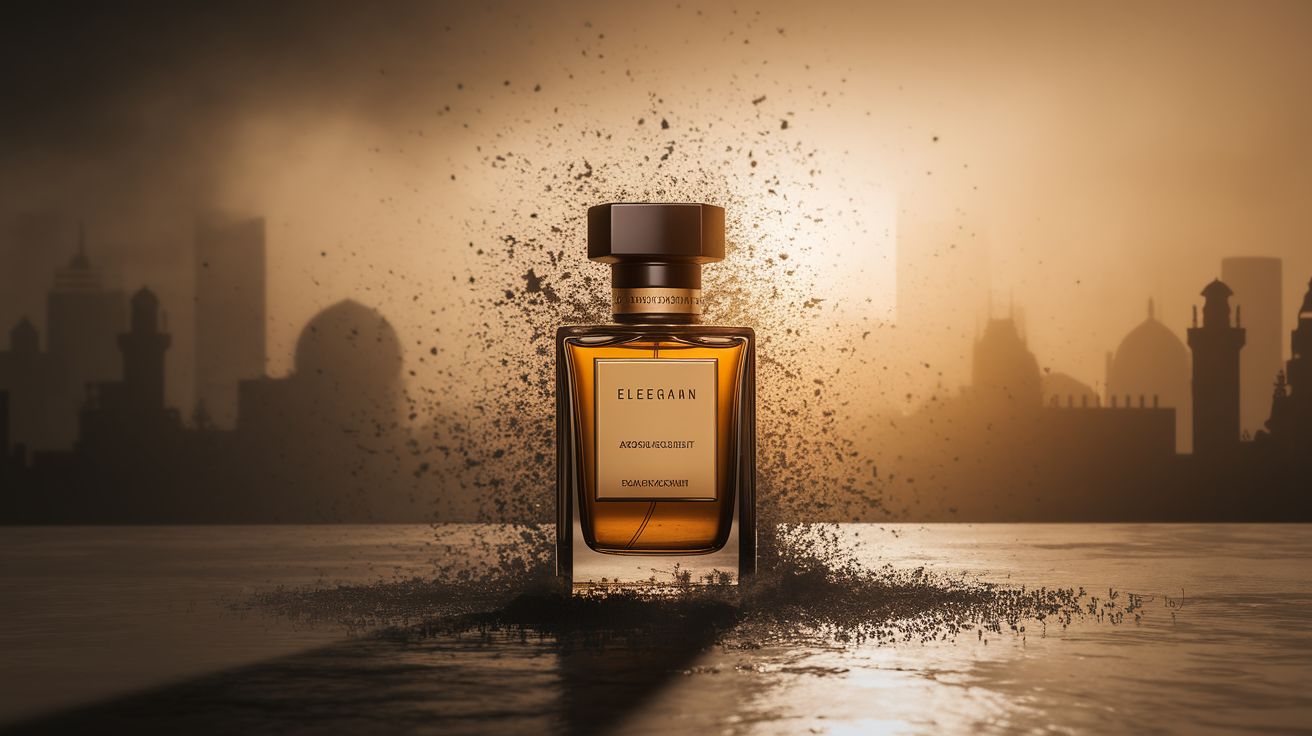
The Delhi Perfume Paradox
November in Delhi. AQI: 400. You apply your favorite perfume before heading to work—three sprays, same as always. Within an hour, you can barely detect it. Your nose feels stuffy. You reapply at lunch. Still nothing. But your colleague in the next cubicle says you smell overwhelming.
What's happening?
You check your phone: Air Quality Index 400. "Hazardous - avoid outdoor activities." You've been wearing an N95 mask outdoors. You assumed the mask was blocking your perfume. But there's something more troubling happening that no one talks about: Delhi's winter smog is physically damaging your olfactory neurons, creating measurable dysfunction in your ability to smell.
This isn't about perfume longevity in different climates. This is about PM2.5 particles binding to your smell receptors and traveling to your brain, causing inflammation and cellular damage. Scientific research confirms that just 6 months of exposure to pollution levels common in Delhi creates significant olfactory impairment.
Add to this the chemical reactions happening in the air: your perfume's terpenes (limonene, linalool) react with Delhi's high ozone and nitrogen oxides, producing formaldehyde and secondary pollutants. The perfume that reaches your damaged nose isn't even the same perfume that left the bottle.
In this guide, you'll learn:
- Official Delhi AQI data for winter (300-500 regularly, peaks at 1,200)
- Scientific research on how PM2.5 damages olfactory neurons
- Why perfume terpenes react with smog to create new pollutants
- The N95 mask paradox (reduces smell but doesn't block perfume gases)
- Honest assessment of wearing House of Sultan perfumes during smog season
- Practical strategies for protecting your olfactory health
Let's start with the uncomfortable data about Delhi's winter air quality crisis.
Delhi's Winter Pollution Crisis: The Numbers
November - "The Great Smog Month"
According to Wikipedia's comprehensive air pollution data, Delhi experiences catastrophic air quality events with alarming regularity:
Extreme pollution events documented:
- November 2016: PM2.5 and PM10 reached 999 µg/m³ during the "Great Smog of Delhi"
- November 8, 2017: AQI reached 999
- November 12, 2024: AQI reached 1,200 - Delhi became the most polluted city in the world
- November 18, 2024: AQI 491 ("severe plus") - worst air quality of the season, PM2.5 at 354 µg/m³ (more than 20 times WHO standard)
Environmental Health Perspectives research on Delhi's pollution patterns identifies November as the single worst month:
"November recorded as the most polluted month in the city."
November 2017 monthly averages:
- PM2.5: 374 µg/m³ (WHO guideline: 15 µg/m³ = 25 times over limit)
- PM10: 768 µg/m³
- NO2: 149 µg/m³
Current 2026 Winter Data
According to IQAir real-time monitoring:
- January 26, 2026: Overall AQI 249 (Very Unhealthy)
- January 21, 2026: CPCB AQI 330 (Very Poor)
- January 18, 2026: PM2.5 peaked at 444 µg/m³ (Hazardous)
Seasonal pattern confirmed:
- March-September: AQI typically 51-200 (Satisfactory to Moderate)
- October-February: AQI 201-500+ (Poor to Hazardous)
- Peak damage period: November-January consistently 300-500 AQI
At these pollution levels, you're not just breathing bad air—you're exposing the most vulnerable neurons in your body to sustained chemical assault.
Three Converging Causes of Winter Smog
Cause 1: Stubble Burning (October-November)
Wikipedia documents the annual agricultural burning crisis:
"In early November, farmers in the neighbouring states of Punjab and Haryana burn the stubble from the previous harvest to prepare land for the next season, and the smoke is carried to Delhi contributing to the smog."
Scale of the problem:
- 35 million tons of crop residues burnt annually
- Occurs after September harvest (October-early November timing)
- Smoke carried hundreds of kilometers to Delhi by prevailing winds
This isn't minor agricultural activity—it's industrial-scale biomass burning creating a smoke plume that engulfs northern India.
Cause 2: Diwali Fireworks (Late October/Early November)
Research published in PMC on firecracker emissions quantifies Diwali's impact:
2024 Diwali firecracker data:
- 500 tonnes of fireworks burnt in Delhi
- Resulted in 25% increase in PM2.5 levels
- Both PM2.5 and PM10 emissions
- AQI elevation: 20-30% according to CPCB
CNN reported on the 2025 Diwali aftermath:
"After festival of lights, New Delhi plunged into toxic darkness and world's most polluted air."
The timing problem: Diwali typically falls in late October or early November—exactly when stubble burning peaks. The combination creates a "perfect storm" of pollution.
Cause 3: Winter Meteorology (Traps Everything)
Environmental research explains the seasonal trapping mechanism:
"Air pollution is worse in the winter months (October—January) as particles remain suspended in the air for longer duration of time due to the lower temperature, wind speed as well as higher relative humidity."
Why winter weather amplifies pollution:
- Temperature inversions: Cold air layer traps warm air above, preventing vertical dispersion
- Calm winds: Pollutants don't disperse horizontally
- Shallow boundary layers: Everything concentrated in breathing zone
- Lower temperatures: Slower chemical breakdown of pollutants
- Higher relative humidity: Particles absorb moisture, persist longer
Even if stubble burning and Diwali stopped entirely, winter meteorology would keep Delhi's AQI elevated throughout October-February.
How PM2.5 Physically Damages Your Ability to Smell
This is where it gets scientifically uncomfortable: Delhi's winter smog isn't just making the air smell bad—it's damaging the biological machinery you use to smell anything.
Your Smell Receptors Are Extremely Vulnerable
Research published in Taylor & Francis journals explains the anatomical problem:
"Olfactory receptor neurons (ORNs), located in the olfactory mucosa on the roof of the nasal cavity, are among the most exposed neurons in the human body, separated from the environment by only a thin layer of mucus."
Think about this: Your brain has neurons that are essentially directly exposed to ambient air. Unlike other parts of your nervous system protected by skin, bone, and blood-brain barriers, your olfactory neurons have only a thin mucus layer between them and Delhi's 400 AQI air.
PMC research on ambient air pollution effects emphasizes this vulnerability:
"Since the olfactory receptors are directly exposed to ambient air, olfactory functions are especially vulnerable to air pollution exposure."
PM2.5 Particles Bind to Neurons and Enter Your Brain
Johns Hopkins Medicine researchers documented the mechanism:
"As we breathe, the air along with any PM and pollutants in it comes into contact with the olfactory epithelium in the nasal cavity. These particles can bind to the olfactory neurons and via retrograde transport end up in the olfactory bulb."
Let that sink in: PM2.5 particles don't just coat your nose—they bind to smell neurons and use the neurons themselves as a pathway to reach your brain.
PMC documentation of the damage pathways identifies multiple mechanisms:
1. Sinonasal and mucosal inflammation:
"Fine particulate matter (PM2.5) causes sinonasal and mucosal inflammation, resulting in dysplastic changes in the olfactory epithelium."
2. Mucus overproduction:
"Some types of air pollutants, such as diesel exhaust and cigarette smoke, are also nasal irritants, causing inflammation, congestion, and sneezing. These irritants can stimulate overproduction and secretion of mucus in the nasal airways. The resulting stuffy nose may prevent odorants from reaching the olfactory sensory cells."
3. Direct neuronal damage:
"Damage to peripheral neurons in the nose lowers sensitivity to odorants, whereas damage to central neurons in the brain reduces the capacity to name odors and to distinguish between them."
Quantified Research: 6 Months = Measurable Dysfunction
PMC study on urban PM2.5 exposure provides specific timeframes:
"Olfactory dysfunction was significantly associated with PM2.5 exposures averaged over 3–12 months in urban-dwelling respondents, with the strongest effect for 6 month average exposure."
Critical insight: You don't need decades of exposure. Six months of Delhi's 300-400 AQI winters creates measurable olfactory dysfunction.
Nature Scientific Reports on global air pollution effects confirms:
"Ambient air pollution undermines chemosensory sensitivity – a global perspective"
ScienceDirect research from Germany found:
"Studies provide robust evidence for an association between long-term exposure to traffic-related air pollution and poor odor identification, even in a region with relatively low air pollution levels."
Important context: This German study showed olfactory damage in areas with "relatively low" pollution. Delhi's November AQI of 400-500 is dramatically higher, suggesting much more severe and rapid damage.
What This Means for Your Perfume Experience
When you apply Rustam, Sinbad, or Antar in Delhi during winter smog season (AQI 300-500):
Your olfactory system is:
- Inflamed: Swollen nasal passages
- Blocked: Excess mucus coating receptors
- Damaged: Some neurons destroyed, others impaired
- Brain-impaired: Central processing reduced
The result:
- You can't detect delicate top notes (citrus, aldehydes)
- You can't distinguish between heart notes (florals, spices)
- You only perceive strong base notes (oud, amber, musk)
- Complex compositions smell "flat" or generically sweet/woody
You're experiencing an estimated 30-50% of the perfume you paid for, based on research showing significant olfactory dysfunction at these pollution levels.
The Perfume-Pollution Chemistry Problem
It gets worse: The perfume itself is chemically reacting with Delhi's polluted air before it even reaches your damaged nose.
Terpenes in Perfumes React with Smog
PMC research on synthetic fragrances and air quality explains the chemical structure:
"Terpenes and their derivatives found in perfumes contain unsaturated C=C double bonds, which readily react with indoor gas-phase oxidants such as ozone."
Common perfume terpenes:
- Limonene: Citrus notes (orange, lemon, grapefruit)
- Linalool: Floral, lavender
- Alpha-pinene, beta-pinene: Fresh, green, woody notes
- Geraniol, citronellol: Rose, geranium
PMC documentation of indoor reactions identifies specific compounds:
"Terpenes were the most commonly and consistently emitted VOCs from fragranced products, particularly limonene, alpha-pinene, and beta-pinene."
"Linalool and β-myrcene exhibit the highest rate coefficients for reactions with ozone among fragrance terpenes."
Two Different Chemical Reactions
Indoors (when you enter AC office/home):
"The terpenes' gas- and surface reactions with ozone and the hydroxyl radical produce secondary pollutants, like formaldehyde and ultrafine particles, that can persist for extended periods in indoor air."
Outdoors (in Delhi smog):
Springer research documents outdoor chemistry:
"Terpenes react with nitrogen oxides outdoors to generate ozone and secondary organic aerosols."
Delhi Has Both High Ozone AND High NOx
What's in Delhi's November smog:
- Ozone (O3): Photochemical smog from vehicle emissions
- Nitrogen oxides (NOx): Vehicle exhaust, biomass burning (stubble)
- High humidity: Winter weather (enhances reactions)
When you wear citrus-based perfume (high limonene content):
Indoors:
- Your perfume terpenes + Indoor ozone → Formaldehyde + Ultrafine particles
- You're creating indoor air pollution
Outdoors:
- Your perfume terpenes + NOx from traffic → More ozone + Secondary aerosols
- You're contributing to Delhi's 400 AQI
Scale of the problem documented:
"Indoor use of personal care products emitted over 200 VOCs and resulted in indoor VOC mixing ratios of several parts per million."
The Perfume You Smell Isn't the Perfume in the Bottle
Chemical reality:
- Perfume leaves bottle with original composition
- Terpenes immediately react with ambient ozone/NOx
- Molecular structure changes (oxidation reactions)
- Different molecules reach your nose
- Your PM2.5-damaged receptors detect only fraction of them
You're experiencing a chemically altered perfume with a damaged sense of smell.
The N95 Mask Paradox
Nearly everyone in Delhi wears N95 masks during November-January smog. But there's a strange perfume-related paradox.
Finding 1: N95 Masks Reduce Your Smell Ability
PMC study on healthcare workers found:
"Wearing N95 masks decreases the odor discrimination ability of healthcare workers"
Mechanism:
"N95 masks may inhibit air exchange and odor penetration, and research shows low olfactory scores in N95 mask wearers, indicating that wearing these masks can reduce your ability to smell."
So wearing an N95 mask (necessary for health) further reduces your already PM2.5-damaged olfactory function.
Finding 2: BUT N95 Masks Don't Block Perfume Gases
Smart Air research on mask filtration reveals the limitation:
"Surgical and N95 masks don't capture gases, meaning you'll still smell odors even if wearing a perfectly fitted N95."
"Most perfumes and fragrances are gaseous compounds, so they would still penetrate through N95 masks."
"Well-fitting N95 masks will block smells coming from particles but not from gases."
To block perfume gases: You'd need activated carbon filter, not standard N95 (PK Safety documentation).
The Delhi Perfume-Mask Paradox
Scenario: November Delhi, AQI 400, you're wearing N95 mask and perfume
What's actually happening:
- Chronic PM2.5 damage: 6 months at 300-400 AQI has reduced your baseline olfactory sensitivity by 30-50%
- N95 mask effect: Further inhibits air exchange, reduces smell ability
- BUT perfume still penetrates: Gaseous molecules pass through mask
- You perceive perfume weakly: Due to combined impairments
- You might over-apply: Trying to compensate for reduced perception
- Others smell it strongly: When you remove mask indoors, overwhelming projection
The dangerous cycle:
- Apply perfume in morning (can barely smell it with mask on)
- Assume you need more
- Reapply at lunch
- Remove mask when entering office
- Colleagues overwhelmed by accumulated fragrance
- You still can't smell it properly (PM2.5-damaged receptors)
House of Sultan in Delhi Winter Smog: Honest Assessment
Let's be completely honest about whether premium perfumes make sense during Delhi's pollution crisis.
Rustam: High Terpene Reactivity = Chemical Alteration
Composition: Grapefruit + Yuzu + Ginger + Cedarwood + Vetiver + Amber
Terpene analysis:
- Grapefruit + Yuzu: Extremely high in limonene (most reactive terpene)
- Cedarwood: Contains cedrol (sesquiterpene)
- Vetiver: Complex terpene profile
What happens in 400 AQI smog:
Chemical reactions:
- Limonene (abundant in citrus) + Delhi's high ozone → Immediate oxidation
- Produces formaldehyde and secondary aerosols
- The grapefruit-yuzu opening is chemically altered before reaching your nose
Olfactory challenge:
- Your PM2.5-damaged receptors can't detect subtle citrus nuances
- Wearing N95 mask further reduces perception
- You might over-apply trying to smell the opening
- Only the amber base (least reactive) detectable
Financial reality:
- You paid for grapefruit-yuzu complexity
- Chemical reactions + olfactory damage = you get "something vaguely citrus then amber"
- Experiencing ~30% of what you paid for
Honest recommendation: Save Rustam for March-September clean air season (AQI 50-150). During November-January smog, the citrus opening—Rustam's signature—is wasted on chemically altered molecules and damaged smell receptors.
Sinbad: Complexity Lost on Impaired Olfaction
Composition: Oud + Incense + Rose + Raspberry + Amber + Benzoin
Terpene analysis:
- Rose: Contains geraniol, citronellol (terpene alcohols)
- Incense: Complex terpene and resin profile
- Oud + Amber + Benzoin: Resinous bases (lower terpene, but still reactive)
What happens in 400 AQI smog:
Chemical reactions:
- Rose terpenes react with ozone (less dramatically than citrus, but still altered)
- Incense compounds oxidize in high-NOx environment
- Sweet raspberry molecules interact with polluted air
Olfactory challenge:
- Sinbad's beauty is in the layered complexity: sweet raspberry opening, rose heart, oud-incense base
- Your PM2.5-damaged receptors can't distinguish between these layers
- You perceive: "heavy oud" (base note) and "something sweet" (undifferentiated)
- The refined composition is completely lost
With N95 mask:
- Olfactory inhibition means you can't appreciate the rose-raspberry interplay
- Only detect strong oud base after removing mask
- Miss the entire first hour of development
Honest assessment:
- Sinbad is a premium niche oriental requiring intact olfactory function
- At 400 AQI with PM2.5-damaged smell: you're getting "heavy sweet oud" at best
- You paid for raspberry-rose-oud artistry
- Experiencing ~30-40% of the composition
Recommendation: Wait for post-winter season (March onwards, AQI < 200) when your olfactory system can recover and appreciate the complexity.
Antar: Nuanced Sweetness Becomes Generic "Sweet Smell"
Composition: Cardamom + Toffee + Caramel + Vanilla + Amberwood
Terpene analysis:
- Cardamom: Contains terpinene, cineole (monoterpenes)
- Vanilla/Tonka: Vanillin (aromatic aldehyde - not terpene but still reactive with ozone)
- Amberwood: Synthetic ambroxan (more stable, but still VOC)
What happens in 400 AQI smog:
Chemical reactions:
- Cardamom terpenes oxidize in polluted air
- Vanillin reacts with ozone (different pathway than terpenes, but still altered)
- Sweet molecules interact with high-humidity winter air
Olfactory challenge:
- Antar's beauty is nuanced sweetness: toffee distinct from caramel distinct from vanilla
- PM2.5 damage means you can't distinguish between sweet notes
- Your receptors detect: "something sweet" (generic impression)
- Cannot tell toffee from caramel from vanilla
Research reality: Studies show olfactory dysfunction reduces "capacity to name odors and to distinguish between them"—exactly what you need for complex gourmands.
Honest assessment:
- You paid premium for toffee-caramel-vanilla-cardamom complexity
- At 400 AQI with damaged olfactory function: "smells sweet"
- Experiencing ~20-30% of the intended composition
Recommendation: Antar is completely wasted during Delhi smog season. Save it for clean air months or travel to Bangalore (moderate AQI year-round).
Practical Strategies for Delhi Winter
Strategy 1: Check AQI Before Applying Perfume
Use real-time monitoring: IQAir Delhi or CPCB official app
AQI-based perfume guidelines:
0-100 (Good to Moderate):
- Safe to wear perfume normally
- Olfactory function not significantly impaired
- Minimal terpene-pollution reactions
101-200 (Unhealthy for Sensitive Groups):
- Light application only (1-2 sprays maximum)
- Olfactory sensitivity beginning to decline
- Some terpene-ozone reactions occurring
- Consider oil-based attars (lower VOC emissions)
201-300 (Unhealthy to Very Unhealthy):
- Consider skipping perfume entirely
- Significant olfactory damage accumulating
- Heavy terpene-pollution chemistry
- If necessary: 1 drop oil attar (not alcohol spray)
301-500+ (Hazardous):
- SKIP PERFUME ENTIRELY
- Your smell is too impaired to appreciate it (30-50% function)
- Terpenes contribute to indoor pollution
- Health authorities recommend "avoiding goods containing perfumes"
- Focus on protecting olfactory health, not wearing fragrance
Strategy 2: Recognize Your Olfactory Impairment
Self-assessment timeline:
If you've been in Delhi during winter (Nov-Jan, AQI 300-400+):
- After 1-2 weeks: Noticeable smell reduction
- After 1 month: Significant impairment
- After 3 months: Measurable dysfunction developing
- After 6 months: Research confirms significant olfactory dysfunction
The dangerous self-deception:
- Your nose tells you: "I can barely smell my perfume, need more"
- Reality: Your olfactory receptors are damaged, not your perfume
Application rule for impaired smell:
- Apply perfume in well-lit room
- Use mirror to see application points
- Count sprays OUT LOUD (don't trust your nose)
- Never exceed 2 sprays regardless of what you smell
- Set phone timer to prevent reapplication within 4 hours
Strategy 3: Oil-Based Attars as Lower-VOC Alternative
Why oils are better during pollution season:
- Lower VOC emissions than alcohol-based perfumes
- Slower evaporation = less terpene release into air
- Reduced contribution to indoor pollution
- More concentrated = detectable even with impaired olfaction
Best attar choices for smog season:
- Avoid high-terpene citrus attars (limonene reacts with ozone)
- Choose woody bases: Sandalwood, cedarwood (lower reactivity)
- Resinous profiles: Amber, frankincense (less VOC emission)
- Musky compositions: Synthetic musks (stable in polluted air)
Application during 300+ AQI:
- 1-2 drops ONLY (oil is concentrated)
- Apply to pulse points UNDER clothing
- Not on exposed skin (minimize outdoor VOC emission)
Strategy 4: N95 Mask Perfume Awareness
When wearing N95 outdoors (AQI 300+):
DON'T:
- Apply perfume to upper chest/neck (you won't smell it through mask)
- Reapply because you can't detect scent (mask blocks air exchange)
- Assume perfume has worn off (it hasn't—mask is blocking perception)
DO:
- Apply perfume to inner wrist, under clothing (1 spray maximum)
- Remember mask reduces your smell ability by design
- Wait 15-20 minutes after removing mask before assessing scent
- Resist urge to reapply immediately
Critical reminder: Perfume gases penetrate N95 mask. If you can't smell it, it's because:
- Mask inhibiting air exchange (temporary)
- PM2.5 damaged your receptors (chronic) Not because perfume has disappeared.
Strategy 5: Timing Perfume Around Pollution Cycles
Delhi's daily AQI pattern:
- 6-10 AM: AQI peaks (morning temperature inversion traps pollutants)
- 11 AM - 4 PM: AQI somewhat lower (sun warms air, better vertical mixing)
- 5-9 PM: AQI rises again (evening cooling, traffic emissions)
Perfume timing strategy:
- If AQI < 200 midday: Apply during 11 AM - 3 PM window only
- Skip morning application (AQI 400+ trapped air)
- Never reapply in evening (pollution rising again)
Delhi's seasonal cycle:
- November: WORST (stubble burning + Diwali + winter inversion) - SKIP PERFUME
- December-January: Very poor (sustained winter pollution) - MINIMAL USE
- February: Improving (warming begins) - LIGHT APPLICATION
- March-September: Moderate to good (AQI 50-200) - PERFUME SEASON
Financial strategy: Reserve premium perfumes (Rustam, Sinbad, Antar) for March-September clean air. Use budget options or skip entirely November-January.
The Uncomfortable Truth About Smog Season
You're Wasting Premium Perfume
Financial reality check:
- Rustam cost: Premium niche perfume investment
- Your olfactory function at 400 AQI: 30-50% reduced (based on research)
- Chemical alteration: Terpenes oxidized by ozone before reaching nose
- Net result: You're experiencing 20-40% of what you paid for
Example with Rustam:
- Paid for: Grapefruit-yuzu opening, ginger-cedar heart, vetiver-amber base
- Actually perceive at 400 AQI: "Something citrus-ish → amber"
- Missed: All the nuance, layering, transitions, and complexity
Health Authorities Say: Don't Wear Perfume During Smog
American Lung Association guidance recommends:
"Switching to no or low-VOC products and avoiding goods containing perfumes, irritants, or combustible components."
Reasoning:
- Perfumes emit VOCs (including reactive terpenes)
- VOCs react with ozone/NOx in polluted air
- Creates secondary pollutants (formaldehyde, ultrafine particles)
- Worsens indoor air quality during outdoor pollution events
- Additional burden on already compromised respiratory system
The Better Investment: Protect Your Olfactory Health
Long-term perspective:
What's more valuable:
- Wearing perfume during 6 months of Delhi winter smog (can't smell it properly anyway)?
- OR protecting your olfactory function so you can enjoy perfume year-round?
Chronic PM2.5 exposure may cause permanent damage:
- Research suggests some olfactory dysfunction may not fully reverse
- Continued exposure during smog season compounds damage
- Your perfume collection is worthless if you permanently lose smell
Recommended priority:
- Protect olfactory health: Wear N95 mask outdoors (blocks PM2.5 from reaching receptors)
- Use HEPA purifiers indoors: Create clean air zones
- Minimize outdoor time: During AQI 300+ hours
- Skip perfume Nov-Jan: Give receptors recovery time
- Resume March-September: Enjoy perfume with intact olfactory function
The calculation:
- 6 months abstaining from perfume during smog = preserve long-term olfactory health
- 6 months forcing perfume use at 400 AQI = accumulating damage + wasting money + not enjoying it anyway
Conclusion: Prioritize Your Nose Over Perfume
Delhi's winter smog crisis creates a perfect storm for perfume failure: PM2.5 particles physically bind to your olfactory neurons, causing inflammation and measurable dysfunction after just 6 months of exposure. November's "Great Smog Month" regularly reaches AQI 400-500, with documented peaks at 1,200—25 times the WHO safe limit.
The scientific reality:
- Research confirms olfactory receptors are "among the most exposed neurons in the human body"
- PM2.5 particles bind to neurons and reach your brain
- Six months of urban PM2.5 exposure creates significant olfactory dysfunction
The chemistry problem:
- Perfume terpenes (limonene, linalool) react with ozone and nitrogen oxides
- Produces formaldehyde and secondary pollutants
- The perfume you smell isn't the perfume that left the bottle
The N95 paradox:
- Masks reduce smell ability but don't block perfume gases
- You perceive perfume weakly, might over-apply
- Others smell overwhelming projection
House of Sultan during smog:
- Rustam: Citrus opening wasted (high limonene reactivity + damaged receptors)
- Sinbad: Complexity lost (can't distinguish raspberry-rose-oud layers)
- Antar: Nuanced sweetness becomes generic "sweet smell"
- All three: Experiencing 20-40% of intended composition at 400 AQI
The honest recommendation:
November-January (AQI 300-500):
- Skip premium perfumes entirely
- Focus on protecting olfactory health (N95 mask, HEPA purifier)
- If absolutely necessary: 1-2 drops oil attar (lower VOC emission)
February (AQI improving):
- Light application only (1 spray)
- Monitor AQI daily before applying
March-September (AQI 50-200):
- This is Delhi's perfume season
- Olfactory system recovering from winter damage
- Can properly appreciate Rustam, Sinbad, Antar
- Enjoy your collection with intact sense of smell
The long-term calculation: Your perfume collection has value only if you can smell it. Chronic PM2.5 exposure may cause permanent olfactory damage. Better to abstain 6 months during smog and preserve your sense of smell for decades than force perfume use you can't appreciate anyway.
Explore House of Sultan perfumes and save them for Delhi's clean air season (March-September) when your olfactory system can properly appreciate the complexity you're paying for.
References
- Wikipedia - Air Pollution in Delhi
- IQAir - Delhi Real-Time Air Quality Index
- Environmental Health Perspectives - Great Smog Month Analysis
- PMC - Estimates of Air Pollution from Diwali Firecrackers
- CNN - Delhi Pollution After Diwali 2025
- Taylor & Francis - PM2.5 Exposure and Olfactory Functions
- PMC - Effects of Ambient Air Pollution on Olfaction
- Johns Hopkins Medicine - Air Pollution and Loss of Smell
- Nature Scientific Reports - Air Pollution Undermines Chemosensory Sensitivity
- PMC - Fine Particulate Matter and Olfactory Dysfunction
- ScienceDirect - Long-term Exposure to Traffic Pollution
- PMC - Synthetic Fragrances and Indoor Air Quality
- PMC - Indoor Emission of Personal Care VOCs
- Springer - Fragranced Products Phenomenon
- PMC - N95 Masks Decrease Odor Discrimination
- Smart Air - Do Smells Mean Mask Not Fitting?
- PK Safety - Respirator Masks for Fragrance
- IQAir - India Air Quality Alert

About Fragrance Climate Research Team